Showing posts with label DNA Kit. Show all posts

Friday, July 26, 2013

11 Rare Dog Breeds


rare dogs 
Over the centuries, people have bred dogs to be companions, workers, snugglers, and pets. Because of this, dogs are the most diverse land animals in terms of physical appearance.  While you might know that Labs are squarely-built short-haired retrievers and Dachshunds are short, squat, little badger fighters– there are many rare dogs whose form and function you haven’t yet imagined.

11. Azawakh

The Azawakh is a sighthound that is very rare outside of it’s West African homeland. Known for its agile and feline-like gait,  the Azawakh are timid by nature, but gentle and affectionate once they get to know you.  It is used for hunting gazelles and other fleet animals of the African deserts.


rare dogs

10. Carolina Dog

Also known as the “American Dingo,” Carolina Dogs are thought to be the oldest canine species in North America, appearing on rock paintings by Native Americans. The Carolina Dogs share DNA with the Australian Dingoes and New Guinea Singing Dogs and even though the breed has been domesticated, there are still wild pups still roaming around.


carolinadog


9. Catahoula Leopard Dog

Prized by Native Americans for their incredible hunting abilities, these pups have been favorites of famous hunters like Teddy Roosevelt. The Catahoula Leopard Dog is named after the Catahoula Parish in Louisiana, where the breed originated.


catahoula-leopard-dog


8. Lundehund

Originally used in Norway to hunt for Puffins, the Lundehund has six toes on each foot, prick ears that it can control at will, and the ability to tip its head backward to touch its backbone. The Norwegian Lundehund is unlike any other breed.

Lundehund


7 Mudi

The Mudi is a mid-sized Hungarian herding dog with a thick, curly coat and smooth face. While they are still rare in the US, the Mudi dogs are gaining popularity with their versatile, energetic attitudes.

mudi

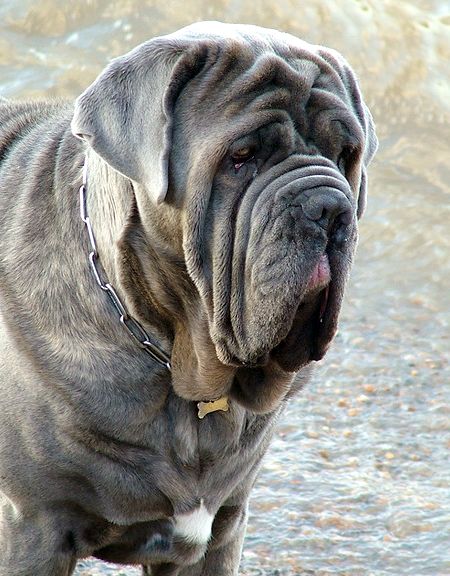
6. Neapolitan Mastiff

Historically bred to fight alongside the Romans wearing body armor and blades so that they could run under and disembowel enemy horses, the Neopolitan Mastiff was almost extinct at the end of WWII. After an Italian painter set up a kennel to protect the enormous pups and bred them with English Mastiffs to diversify the bloodline, the Neopolitan Mastiff has evolved as a breed and one even appeared as Hagrid’s pet dog, Fang, in the Harry Potter movies.


neopolitan mastiff


5. Xoloitzcuintli

Pronounced Sho-lo-eets-quint-lee, the Xoloitzcuintli is usually referred to as the “Mexican Hairless Dog” or just “Xolo.” This breed is so old that it was actually worshiped by the Aztecs. Because many Americans are not familiar with Xolo pups, it has been mistaken for the mythological Chupacabra along the US border states. The Xoloitzcuintli has not been inbred over the years like many other purebreed dogs and it is a very healthy and hardy dog that only requires a bit of moisturizer, sunscreen, and regular bathing.


Xoloitzcuintli


4. Salish Wool Dog

Originally from the Washington State/British Columbia area, the Salish Wool Dog is now extinct as a distinct breed. These pups were small with long white hair that the native people sheared (like a sheep) to weave into treasured Salish blankets. The dogs were kept in groups ranging from 12 to about 20 and kept safe on islands or in gated off caves.


Salish Wool Dog


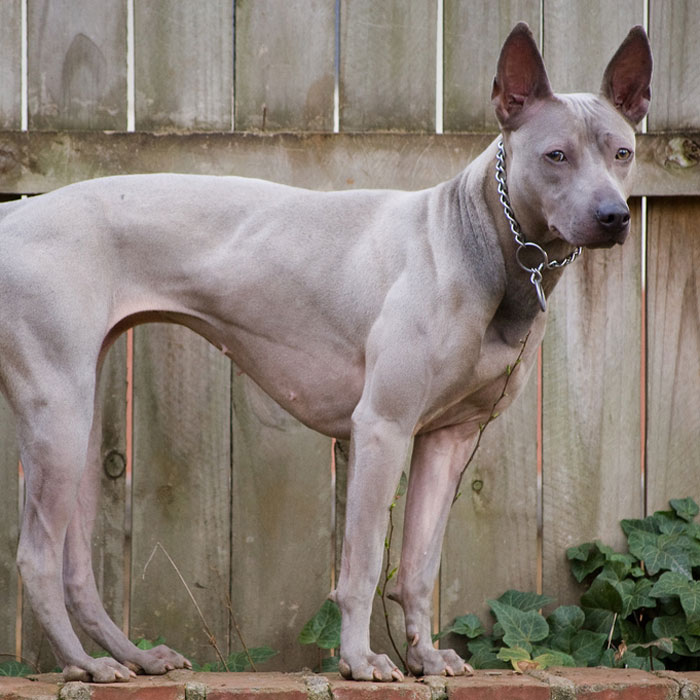
3. Thai Ridgeback

Similar to the Rhodesian Ridgeback, the Thai Ridgeback pup has a line of hair growing in the opposite direction along the spine. These strong-willed, powerful pups are used as livestock guardians in their Asian home.


thai-ridgeback

2. The Pachón Navarro

With a nose like the double barrels of a shotgun, the Pachón Navarro is an extremely rare Spanish hunting dog that was once believed to have superior sniffing skills. Now breeders know that the Pachón Navarro’s nose is just cosmetically different, they don’t offer any advantage over a regular pup nose.

 Pachon Navarro

1. Tibetan Mastiff

The Tibetan Mastiff is a large, fearless dog traditionally bred to guard herds, flocks, families, and entire villages. One of the massive fluffy pups was also recently sold in China for $1.5 million dollars, and became the most expensive dog ever sold.


Tibetan_Mastiff


Friday, July 19, 2013

Top 10 Reasons To DNA Your Dog

1.   Curiosity.  "What breed is your dog?"   is often the #1 question owners of mixed breed dogs get asked.   And most are never sure how to answer. A DNA test will serve to answer the question and satisfy the most curious of dog owners.

2.   Training.   Knowing the breeds in your dog is the key to understanding their personality traits.   This allows dog owners to focus on the unique habits of their dog's specific breed heritage when training and socializing the dog.   Every breed comes with its own hereditary personality traits created from centuries of breeding.   A dog with terrier breeds will require different training methods than a hound or a retriever mix.   Each type of dog, and even each breed, has its own special triggers, which can be key to making sure your dog is properly trained.

3.   Health.   As the primary caregiver to your dog, knowing the genetic health risks associated with your dog's breeds and discussing them with your veterinarian are vital to your dogs well being.   One of the most important reasons to know the breeds in your dog is to make sure you are aware of the genetic health risks associated with these specific breeds.   All breeds are susceptible to specific genetic health risks.

4.   Love.   A DNA My Dog DNA test provides you with a registered ID number and a certificate of your dog's own unique DNA genetic make-up.   This certificate is suitable for framing and is a wonderful piece of history you can keep forever.   We know you love your dog.   At DNA My Dog we understand the special connection you have with your dog, we love our dogs, too.   We have created a package of results you can be proud of.

5.   Price.   Only a few years ago the cost of DNA testing was well into the hundreds of dollars.   With advances in processing and equipment, today's DNA tests, especially those for dogs, are now more affordable than ever.   A test that used to cost hundreds of dollars is now about $70.

6.   Ease.   Collecting cheek cell samples  (buccal samples)  is the most accurate and easy way of testing for DNA.   For every critical application where DNA is required it is typically a cheek swab that is used.   For example, if you are watching CSI on TV, the investigators take a cheek swab to match a suspects DNA to evidence found at a crime scene.   Globally, DNA databases used for matching DNA have been built by using cheek swabs.   Blood samples are simply not the only, or the preferred, way to collect DNA samples for forensics labs, the FBI or any other organization that routinely collects DNA.

7.   Fast.   The same advances in technology that have brought down the price of DNA testing have also sped up the process.   Historically results often took up to 6 weeks or more.   Today, once our lab receives a sample, the DNA is immediately extracted and processed.   Results are then validated and reported in less than two weeks.

8.   Painless.   Collecting a sample from your dog is easy and painless.   The special provided polyester type swab is rubbed inside your dog's cheek for about 20-30 seconds.   This is done twice in case there is not enough DNA on each swab or more DNA is needed.   The entire process takes under 2 minutes.

9.   Confirmation.   Often, dog owners are told their dog is a certain breed.   In all but the most papered and registered dog this is inaccurate. Determining a breed by physical appearance is simply not a valid way of identifying breed make up.   Many mixes can take on the physical characteristics of other breeds while not having the DNA of that breed at all.   For example many Boxer and Labrador Retriever mixes can resemble German Shepherd and even Pit Bull type dog mixes.

10.   Exciting.   Having a DNA test on your dog is fun and exciting.   Most of our clients are referred by friends and family who have done the test themselves.   If you are curious or unsure of the breeds that make up your dog, try a DNA My Dog test today!

Can you think of other reasons?   Here's a few that immediately come to mind.

Ever been refused a rental because of your dog's breed?    What if you could wave a certificate of DNA lab results showing your dog's true breed composition?

What if a friend of relative is scared to death of your sweet pooch because it looks like a dreaded, scary dog?  Again just show them the composition.

Even if your dog may have some of the scary breed in him, it might be less than 5%, so that works as a point of using logic to win over family and friends.

On the other hand a sweet, silly, goofy dog that everyone loves might turn out to have some of those scary relatives in his genetic make up, yet because everyone already loves him, they become more accepting and informed about those fearsome breeds.

A multiple composition dog gives you the unique opportunity of creating a new designer dog breed name!  Tell that to the landlord or family and friends!

Knowing your dog's composition will help you understand why he has herding instincts, or why he prefers to launch himself into water every chance he gets.

Did you buy or resuce the type of dog that you thought you did?  Does it really matter, as long as you are well bonded and connected?


 This easy and affordable at home Canine DNA Test is performed by one of the leading genetic testing labs in North America.  It will identify with over 99.75% accuracy all of the breeds in any dog.

Experience indicates that approximately 3% of all DNA canine testing will yield results that are inaccurate or cannot be interpreted.   The reasons for this are:

Dogs have extremely high levels of oral bacteria which may result in degeneration of the sample before our DNA extraction process commences.

Just      Donate $10 Online  and Happy Tails Rescue Association will send you the Canine DNA Test Kit with complete instructions on how to perform the check swab.  You'll mail your swab and $62.00 to the address included in the instructions.  We hope you'll be pleasantly surprised and share your stories.!