Friday, September 27, 2013

Why Does Portland Oregon Support Killing Animals?

PLEASE POST FAR AND WIDE!  THIS HAS TO STOP!!

Gail, with Watchdog.org, see email below, spends her life PAYING (out of pocket) for PUBLIC records (spending more than $300 a month) to help dogs caught in the lethal trap at Multnomah COUNTY Animal Services.  She offers foster homes and has many times taken dogs from MCAS with medical needs, promised by MCAS that they will pay for the veterinary care, only to find that they break their promise on the offer and she and people like me donate $$ to pay what MCAS promised to pay. 

The most egregious point is that despite offers to foster or board at a kennel, MCAS, rather than turn a dog over for alternate care, or offer rehabilitation services or lower fines to return animals to the people who love them, chooses to kill.

PLEASE READ BELOW ABOUT DOGS HELD IN SOLITARY CONFINEMENT, BELONGING TO POOR PEOPLE WHO CANNOT AFFORD THE STIFF FINES!  IN THE END, DOGS DIE FOR NO GOOD REASON!

Do you have any media contacts?  If so, please forward.  This is a story worth telling!!

THANK YOU!!

~ Bev Trover

Curious How Energy Healing Can Help You or Your Animals- Class in Oregon


I plan on attending this great class, if you have some animal loving friends who are curious about energy healing, please forward this info via social media.   Doc, pictured above was one of our Rotts before he was lucky enough to attract Liza.

Doc's human died with Doc and another Rott locked into the home.  It was more than 2 weeks before they were discovered, very traumatic as you would expect.  He's all well, loving life and the specialized attention his mom gives him.


What Is A Dog Bite and Epidemic Myths

Article courtesy of:  National Canine Research Council

What is a dog bite?”: the question seems simple enough. Most of us would describe a dog bite as an incident where a dog deliberately inflicts an injury to a person. However, animal control and public health departments consider any incident in which a dog's tooth or nail breaks a person's skin - regardless of the circumstances or any characterization of the dog's intention - to be an animal exposure that merits their notice.

Based on this definition, animal control and public health departments classify all of the following types of animal exposures as dog bites:

Nips from playful puppies.

Scratches from a dog's nail.

Scrapes from a dog's tooth.

Accidental bites by dogs.

Bites from injured or ill dogs receiving assistance or comfort from Good Samaritans (e.g. dogs hit by cars).

Bites by working K-9 dogs delivered in the performance of police duties.

Bites delivered to canine professionals such as veterinarians. These may have occurred under extreme duress, such as if the dog was in pain or otherwise unable to control its behavior.  (e.g. a vet tech bitten while removing intubation tube from a dog's throat)

Dog Bites and "Statistics"

Dog bite statistics include a range of types of dog bites. The vast majority are not severe enough to warrant a trip to the emergency room. 

In addition to reporting even the most benign nip, scratch or scrape, dog bite statistics do not provide a complete picture of dog bites. They fail to accurately show which dogs bite, why dogs bite, or describe just how frequently owners irresponsibly allow their dogs to become a problem to people or other animals.

One of the primary functions of animal control agencies is determining whether domestic animals involved in biting incidents have up-to-date rabies vaccinations. This is the primary reason why animal control and public health agencies continue to retain an interest in all animal exposures, regardless of the individual circumstances of individual cases.

Forms used to record an animal exposure, which are often called ‘bite reports’, will usually include space where parties involved or the animal control or health officer can provide a description of the circumstances.

 Did a dog scratch his owner during a playful romp? 

Did a dog chase and bite a child riding a bicycle?

Unfortunately, when animal exposures are tallied up, they may be released to the public as simple bite totals. The circumstances of each incident, and any understanding to be gained from them, have been stripped away. In consequence, bite numbers are not an accurate representation of canine aggression. Like the term ‘dog bite’, which is used to describe a wide range of types of animal exposures, ‘canine aggression’ is a general term applied to range of different, specific behaviors.

The following example illustrates the important point that dog bite reports are not necessarily records of canine aggression per se, and also that bite totals obscure the important point that bites originate from different circumstances.

Consider a report containing separate bites inflicted by four dogs assigned the breed descriptor "A". Each bite is actually the culmination of a different dog’s response to the following individual events:

Dog One (Breed “A”) jumps up and scratches a child with its nail.

Dog Two (Breed “A”) is hit by a car and critically injured, and bites the hand of a rescuer.

Dog Three (Breed “A”) chases a child on a bicycle and nips the child's ankle.

Dog Four (Breed “A”) lunges and inflicts a serious bite to a child's face after the child comes too close to the dog's food bowl.

Even if the breed descriptor, “A”, were accurate in each of the cases above (which recent studies reveal is unlikely), each of the four incidents is distinct, involving canine behaviors that animal experts would not describe in the same terms.

(It is worth pointing out that in two of these incidents, an owner/parent may not have properly supervised the interaction between a child and a dog. In the other two incidents, an owner has allowed his/her dog to roam, failing to control and contain their pet.)

Breed Labeling and Dog Bites


Bite totals become even more misleading when subdivided by breed descriptors. 

At least half of the dogs in the United States are mixed breed dogs. It is impossible to breed label dogs of unknown history and genetics solely on the basis of their appearance.

Research conducted at two (2) universities has confirmed that attempts to identify visually the breeds in a dog of unknown origin correlate poorly with a DNA analysis of the same dog.[i]  
Further, different observers, even those with considerable experience with dogs, do not agree with each other. Nevertheless, animal controls and shelter workers continue to assign single breed descriptors to dogs likely to be of mixed breed whose origins are unknown.

Even if visual breed identifications were accurate, dog bite totals still would not provide evidence that some breeds or groups of dogs bit more frequently than others. Breed populations within a given jurisdiction are not known. Therefore, incident rates cannot be calculated with any accuracy.  Further, on the basis of samples obtained from veterinary clinics, animal shelters, and dog licensing, we can conclude that the popularity of types of dogs varies from place to place, and changes over time.

The Myth of the Dog Bite Epidemic

The definition of epidemic is: extremely prevalent; widespread, or a rapid spread or increase in the occurrence of something.

The term ‘epidemic’ could have been applied to dog bites in the early 1970’s; however, it is not accurate today.

Late in 1974, a study published in the Bulletin of the New York Academy of Medicine stated that the number of dog bites reported in New York had increased by 37% between 1965 and 1972.  The article was titled, “Dog Bites: An Unrecognized Epidemic.”[ii] The following February, an Associated Press article appeared in newspapers across the country carrying a similar headline: “Dog Bites – Unrecognized Epidemic in the United States.” The AP story reported significant increases in 10 other American cities besides New York.

The irony is that the “epidemic” began to subside almost as quickly as it arose. Researchers in Baltimore, Maryland, one of the cities included in the AP story, reported that new municipal policies had quickly reversed the ‘epidemic’ trend in that city.  From a peak total of 6,922 in 1972, by 1976 dog bites declined to 4,760.  The decline has continued into the present day.  For all of 2011, there were 719 reported dog bites in Baltimore City.[iii]

There is no national system in the United States for tallying reports of dog bites. 

The often-repeated estimates currently cited to argue that there is still a dog bite "epidemic" derive from two telephone surveys conducted to assess a wide variety of injury risk factors and injuries. The first survey was conducted in 1994. 

 From among the 5,328 persons who responded to this survey, interviewers obtained reports of 186 dog bites participants reported had occurred within the 12 months prior to the interview. (Only 38 of the 186 bitten sought medical attention).  The second survey, conducted between July 2001 and February 2003, returned a result showing that dog bites had declined overall, and had declined significantly among children.[iv]

 Adding to the confusion, none of the survey-derived estimates are consistent with concurrent reports from public health agencies across the United States. In fact, communities from coast to coast report the good, but less publicized news that contrary to the estimates, actual reports of dog bites to public agencies have decreased dramatically since the 1970’s.

Current reports obtained from public health agencies show that there is one reported dog bite for every 2,000+ New Yorkers and one for every 1,365 Chicagoans. The telephone surveys mentioned above, on the other hand, show one bite for every 68 Americans nationwide (310 million Americans divided by 4.5 million dog bites = 1 bite in every 68 people).


What might account for this discrepancy?  

The authors of the survey reports themselves underscore that they did not define for survey respondents what they meant by a ‘dog bite’.

 (This is the primary issue with reporting of dog bites by public health officials, as we describe in the preceding paragraphs.) The respondents were only asked if they had been bitten by a dog - not if they had been injured by a dog.

The survey also reported that only 19% of those who responded that they had been bitten by a dog also said that they sought medical attention.  What, then, was the nature of the 81% of incidents for which respondents did not seek medical attention? Two potential answers exist: either the contact with the dog resulted in no identifiable injury, or that injury was negligible.

The Enduring Strength of the Human-Canine Bond


NCRC offers this short report in order to advance a better understanding of how dog bites have been reported over the decades, as well as recognition of the limited and incomplete picture that this dog bite “data” provides.   

Americans have hundreds of billions of interactions with dogs on a daily basis.  The overwhelming majority of interactions between dogs and people are rewarding for both parties. Of the very small number of interactions that result in human injury, many could have been avoided by supervision of infants and small children around dogs; education of children and adults about safety around dogs; and education of dog owners about dog well-being and their responsibilities for the humane care, custody and control of their dogs.

Can you spot cancer symptoms in dogs and cats?


While it looks as though cancer affects greater and greater proportions of people in our society, it is also affecting larger numbers of our pets. It might seem like more pets are affected by cancer than in the past, but the hard numbers tell us we are recognizing and diagnosing the condition more frequently.

As our pets live longer and fuller lives with better medical and health care, they are equally subject to cancer in much the same ways we are. A diagnosis of cancer can be confusing, but it is not always a death sentence for our cats and dogs. There are numerous areas in which one should be informed.

Cancer is not one single disease.

 Rather, it is an overgrowth of damaged cells that can literally spring from any tissue in the body. This means there are many different forms cancer takes.

 Some times the tumor is benign, or a localized tumor that does not metastasize or spread to other parts of the body. Other times it is malignant, meaning cancer cells may travel to distant sites throughout the body by way of the bloodstream or through the vessels of the lymph system.

Most cancer symptoms in dogs and cats are identified through a variety of different behaviors. These are typically not recognized as cancer warnings by the pet owner.

 The American Veterinary Medical Association has organized a Top Ten list to help pet owners identify cancer symptoms in dogs and cats:

1. Abnormal swellings that persist or continue to grow
2. Sores that do not heal
3. Weight loss
4. Loss of appetite
5. Bleeding or discharge from any body opening
6. Offensive odor
7. Difficulty eating or swallowing
8. Hesitation to exercise or loss of stamina
9. Persistent lameness or stiffness
10. Difficulty breathing, urinating, or defecating

(Veterinary Cancer Society)


These symptoms are not always cancer related, but they should always be investigated, especially as a pet ages. Many kinds of cancers become more prevalent with age.

Once your pet has received a cancer diagnosis, your veterinarian will want to determine what extent the cancer or tumor is currently at. This is a conventional method of developing both a prognosis as well as the treatment protocol for your pet.

Depending on what kind of cancer it is and where it is located, a variety of tests may be performed including things like blood tests, biopsies, radiographs, ultrasounds, and endoscopy among other things.

Treatment is based solely on the type and extent of the cancer. If it is a localized tumor, surgery is often used to "debulk" and remove it. These tumors have a reasonable chance of removing all cancer.

 Other times more treatment will be necessary. Additional options include radiation, chemotherapy, and immunotherapy. A concerned pet owner should always ask as many questions as possible and do the right research to understand the situation.

 It’s okay to ask for a second opinion, especially from a board certified veterinary oncologist.

There is no exclusive answer when treating a pet for cancer. Many factors must be weighed such as the type of cancer, the severity, the prognosis, and the quality of life. For example, if a dog or cat is an elderly animal with bone cancer, will the quality of life be good to remove a limb if the others suffer from arthritis?

In a surprisingly high number of cases the use of alternative medicine and supplements offers an excellent addition to cancer treatment. These therapies can help boost immune systems, relieve nausea, calm digestive tracts, provide necessary anti-oxidants, and remove toxins (like residue from chemotherapy) from the system.

Many times these therapies alone, especially in cases where it seems the options are limited, provide a pet with more quality and quantity of life than expected. Our first job as responsible pet owners is to recognize cancer symptoms in dogs and cats, get informed, then get busy bringing our best friends back to good health.

  
Author Gary Le Mon 

"This article appears courtesy of  Natural Wonder Pets

Osteosarcoma NOTE:  As you can imagine Happy Tails has had ample experience in working with dogs who have cancer, some come to us with advanced symptoms, others develop it.  Keeping your dog or cat comfortable, eating and drinking normally, participating and living life fully until our Creator decides it's time for your dog to join the Rainbow Bridge.   

When we suspect cancer, we immediate begin immune support and go to that extra effort to ensure that there are no toxins in the diet or environment.  For those who's dogs drink city water that means NOT drinking chemically treated water, only natural spring or well water. 

If you want to consult with one of the world's best vets she does so long distance.  You can reach Dr Gloria Dodd at this link.    Why Animals Get Sick

How To Trim Dog Nails

Have you ever clipped your dog’s nails only to have him yank his foot away and yelp out in pain? If so, rest assured you are not alone. Many pet owners have experienced similar situations with their dogs. It is often hard to know the correct way to trim dog nails without causing pain. But with proper instruction and a little practice, you could soon be as good as a professional.

Dog Nail Anatomy 101

To get a good understanding of proper toenail trimming techniques, you must first understand basic dog toenail anatomy. Dogs have four toes, also called pads, each having a toenail. In many breeds there is also a fifth toe located on the inside of the leg. The toenail for the fifth toe is called the dew claw. 

Dog nails are very similar to human fingernails and toenails. Once the nails have grown out, the ends are dead and painless when trimmed. But trim too close and you will cut into the quick, which is the living tissue of the nail bed. 

Ask a
NATURAL
Pet Health QuestionGet a
NATURAL
Pet Health AnswerShare your
NATURAL
Pet Health StoryRead a
NATURAL
Pet Health Article

Some dogs have white toenails while others have dark brown or black toenails. The quick of the toenail is easy to see in dogs having white nails, appearing as a dark line. 

However, it is nearly impossible to see the quick in darker colored nails. 

Dogs, like humans, experience pain if their nails are cut into the quick. This causes a burning sensation, throbbing pain and bleeding, which will leave the nail and quick sore and sensitive for days. 


Dog paws are all fundamentally the same except for variations in shape and size. Their toenails, however, will grow at different rates depending upon activity levels and the type of surfaces they inhabit.

 Dogs who spend a lot of time roaming outdoors or on concrete, asphalt, or other abrasive surfaces will have some natural wearing and trimming of the nails. They may not require manual trimming as often. However, these circumstances may also contribute to dog nail sharpening. Even if there is no need for a trim, filing or buffing may be required to take away the sharp edges.

Why is Dog Nail Care Important?

There are many reasons why it is important to regularly trim and care for your dog’s nails. Not only does improper care cause health problems for the dog, it also causes problems for you and your belongings. Proper dog nail care helps to prevent a number of potential problems, which include:

• Ingrown toenails – causing redness, swelling, and discharge having a potent odor
• Sore feet and legs
• Joint pain
• Discomfort when walking
• Scratches to you, your furniture, and floors
• Punctures to soft floor coverings such as linoleum and vinyl
• Picking and tearing of furniture fabric, carpet, and rugs

What to Use When Trimming Your Dog’s Nails

There are several types of manual trimmers as well as a motorized rotary tool available. When selecting a trimmer, you should choose the one that best suits your dog’s size and one that you feel comfortable using. Most of all, you should remember never to use regular fingernail clippers to trim dog nails. 

Although your dog’s toenails grow much like your fingernails and toenails, dog nails grow rounded versus flat and they are much thicker. Using regular fingernail clippers to trim your dog’s toenails will result in pinching of the toenail, which may then cause it to break, crack, and split into the quick. This is followed by pain, bleeding, and jagged nails.

Tools Needed

When preparing to trim your dog’s toenails, you should have the following items ready for use:

• Manual or rotary clippers
• A product to stop bleeding – a coagulant such as styptic powder or pads
• Nail file
• An enamel nail polish - made for dogs

Pain Free Toenail Trimming

Dog nails typically require trimming every three or four weeks. When executed properly using the correct tools and technique it can be a pain free experience for both you and your pet. The basic trimming technique is:

1. Hold your dog in your lap or to the side if the dog is large. Pet and reassure him as you wrap your arm around the middle of his body. (If you are right-handed, use your left arm and if you are left-handed, use your right arm.)

2. After wrapping your arm around your dog, hold his foot in your hand with your thumb on top of the toe of the toenail you are preparing to clip. Continue to talk softly to your dog, reassuring him.

3. Follow the placement directions of your clipper of choice and, with a steady hand, clip a small piece of the nail off at a 45 degree angle.

4. Look at the nail. If you see a dark spot in the center of the nail this is the quick and you should avoid cutting into the quick. If you do not see the quick, trim another small piece of nail and recheck for the quick. (If you accidently cut into the quick, immediately apply a blood coagulant to stop the bleeding.)

5. Repeat the same procedure for each toenail including the dew claw. Depending on the anxiousness of your dog, breaks may be required to calm him down and further reassure him. (Release his foot but keep him in your lap and pet him, beginning again once he is calm)

6. File any rough edges and apply a coat of enamel nail polish to each toenail. Then move on to the next paw.

7. Repeat entire process, trimming the toenails of all four feet.

8. Praise the dog and reward with a treat.

Although trimming your dog nails can be a daunting task, filled of apprehension and uncertainty, you can master the process by using proper tools, staying calm, and practicing proper technique. Once you gain your dog’s trust and develop a regular routine for trimming his nails, the entire process will become more relaxed and comfortable for both of you. 

  
Author Gary Le Mon 

"This article appears courtesy of  Natural Wonder Pets


Why Does Portland Murder Dogs When There Are Rescue/Adoption Options?


Remembering Ozzie, a homeless man’s loved dog,
MCAS 520553, killed at MCAS as soon as MCAS could claim him as their property
 
To the public:
 
 Seek an immediate investigation of MCAS (Multnomah County’s animal control) including closure and investigation of its management and employees responsible for this travesty. 
 
Ozzie, a little brindle pit bull dog, who belonged to a homeless person, is one case among many, part of a long documented history of this county’s needless killing of companion animals under the guise of “keeping he community safe”.   
 
Those in charge of policy and its execution are: Michael Oswald, Officer Michelle Luckey and Officer Charles Poetz.  David Blankfeld, County Attorney, is responsible for his complete indifference and failure to seek or mediate humane solutions, silently endorsing whatever the agency wants to do no matter the available humane options. 
 
County Counsel Blankfeld  gives “legal opinions” without considering ethical moral  boundaries or considerations,  noting only when an animal becomes “county “ property that  the agency can “dispose” of that animal at will, meaning so it can be destroyed.
 
Almost always the “offenses” are correctable offenses that do not require killing: they simply require training and management  and sometimes help getting that assistance. But even when public safety concerns can be met and humane options exist , MCAS prefers to retaliate against owners by killing their companion animals.  
 
Multnomah County, particularly targets companion animals belonging to the less fortunate in our community including the homeless; those without means.
 
 It is the grim task that Multnomah County does best. 
 
They seek no humane options preferring death as the best way to protect the public’s safety because they view animals as disposable pests, nuisances and liabilities in a town and a county known for its animal lovers.  
 
 Most impounded animals (those not on the adoption floor and that is the overwhelming majority) are held in solitary confinement, not allowed any personal contact or exercise until they are “tested”.
 
 Most staff is forbidden from entering Intake or Security to engage the animals on Intake or Security in any way. In those areas, Michael Oswald has enforced staff rules forbidding all normal social contact with animals including happy talk or visual contact; no treats as part of his prison for homeless animals; the only philosophy he holds. It explains the fear one sees in public records descriptions of homeless animals and their relief when those released, the lucky ones, are allowed to leave the agency.
 
Ozzie, a friendly brindle pit bull, belonging to a homeless man Michael Holter, (who in addition   suffers from depression, Ozzie was his service dog,) did have a humane option:  places to go. He could have lived with Michael’s mother in her new home with a fenced yard out of county (MCAS permits banishment from the county as an alternative).
 
 He could have gone to a rescue or just a safe home. But in its haste to kill, as soon as MCAS director Michael Oswald found an advantage, when David Blankfeld noted the county could take custody of Ozzie as their property ( because Michael Holter did not have the $500 out of pocket for the writ to proceed, although we would have raised that sum) the county took immediate advantage. MCAS killed Ozzie on September 17, the day after David Blankfeld noted to MCAS “it is OK to proceed with the disposition of Ozzie as he is the property of the county”.
 
 Seizing Ozzie as county property was all that mattered.  At that time no one notified Robert Babcock, the attorney for Ozzie’s family, or Ozzie’s family, as we had begun to raise the necessary $500, knowing  full well that we had and always seek humane options and that we were doing so for Ozzie. Better to go around those potential options and win, killing a helpless dog by killing swiftly in the dark, making it a moot point.  That too is documented county habit, to “win” at all costs the taking of the life of a young animal.
 
Why not outwit a homeless suffering from depression and his mother knowing the family didn’t have the additional $500 required to permit the writ to move forward?  
 
 Why not just decide not to tell the lawyer involved?
 
 Why let me know when MCAS knows I work to find humane options. 
 
Certainly David Blankfeld knows this as do the personnel at MCAS. But we only learned of Ozzie’s planned death after he was already destroyed. What did Multnomah County’s inhumane clever government manipulation “win”? The right to be cruel and get away with it?
 
There is no justice for the poor and homeless in Multnomah County, certainly not at MCAS the end destination for many of the animals of vulnerable populations.  The homeless and poverty stricken are not provided justice in Multnomah County simply because they are poor.  
 
 Justice is “unaffordable”. Ozzie died for lack of $500 and this agency’s intransigence. The county’s government refused to waive the fee. Neither mercy nor justice should come with an attached price tag marked “unaffordable”...
 
Using poverty and a citizen’ inability to pay  is how MCAS “wind” permission to kill helpless animals in Multnomah county along with phony behavior tests that testify only to the fear and sometimes terror of frightened lost animals in an unfamiliar jail set up for the county’s lost and homeless animals.
 
Ozzie
 
Ozzie was held in solitary confinement from February 15, the day after Valentine’s Day, until September 17, the day he was destroyed by MCAS. 
 
He was alone continuously for 215 days, all spent in solitary confinement in a concrete block isolated kennel: no social contact or exercise allowed by MCAS.  No one who advocated for Ozzie, his attorney, those of us in the animal welfare community, or his family, was notified or given the option of seeking an alternative. 
 
He was killed swiftly for what is in fact an easily manageable behavior. No one was given a chance. Killing swiftly, the agency’s habit is done to force its will, render the point moot (“too late)...
 
Ozzie’s crime, the dog who loved all people, was occasional aggression towards some small animals some times (a common behavior with some dogs; but civilized societies don’t kill live beings to “end” the problem; they/we fix the problem through management and training; it is what civilized people do)
 
 On this occasion Michael Holter’s mother exited the car with Ozzie after asking the owner of the small dog in front of the car to step back (he did not).  No serious injures ensued. (The injury was minor; broken skin). The incident was an easily solved management problem but MCAS only believes in harsh punishments, killing, escalating fines, banishment and coerced surrender.
 
Ozzie was impounded; as it was a repeat offense and ownership suspension was sought .MCAS refused all problem solving solutions. MCAS does not have nor cares about training and education prevention: just muzzles, kennels, (doggy jails for one) and escalating fines leading to forcing owner surrender. Once impounded on Security, Ozzie lived day after day in a concrete block cell, no toys, no attention, no exercise, and no eye contact, nothing per Michael Oswald’s rules for kenneling on Security and much of Intake at MCAS.
 
Michael Oswald also discourages visitors from coming to see their impounded animals. His rules for visitors make it as stressful, sad and difficult an experience as possible to deter the public from visiting.   MCAS made visiting Ozzie, (friendly to all humans, just some dysfunctional behaviors around some small dogs), literally impossible for his owners.
 
 The restrictions were: call ahead, appointment only, when it is almost impossible to get telephone service,   restricted to 15 minutes, divided into 5 minute segments, 5 minutes each since there were three persons: Michael, his sister, and mother; no treats; not allowed to get out and exercise. All visits are monitored by staff to see that no rules are broken. The restrictions border on sadism. There is no public safety reason for them at all, just cruelty. And they are commonplace at this agency. .
 
All that prevented the writ of review for Ozzie, moving forward was Michael Holter and his mother's poverty.  They did not have money for the $500 writ of review.
 
The county refused to consider his poverty a mitigating circumstance and reduce or lower the fee. Michael Holter’s homelessness and diagnosis of depression were in effect held against him. Neither he nor his mother had $500 for the writ of review to move forward/proceed. MCAS exploited that fact and declined to consider humane alternative solutions when Ozzie became their “property”.
 
But there were many humane solutions from management training to allowing Michael Holter’s mother who lives out of county and has a duplex with a securely fenced yard who wanted to have Ozzie come live with her. She would have been happy to build a kennel if that were a requirement or condition.
 
Instead, MCAS took gross advantage of their alleged granting of final “custody” and exploited the family’s impoverished means, as they do with all impoverished clients. They use it to leverage control. 
 
They never called the attorney, Robert Babcock or the family before killing him because there were options. Killing is all they care about at this maximum security prison for stray animals: “winning” the right to take a life when options clearly existed.
 
Had anyone  known about the  monetary restriction, $500,  that prevented Ozzie’s writ of review case from moving forward , had any of us known in the world of animal welfare,  we would have  raised the  money immediately.
 
 In fact we were doing so yesterday when we learned that was the stumbling block and didn’t know Ozzie was already dead.  Justice shouldn’t be denied homeless persons or those with limited income because they can’t meet exorbitant fees.
 
Instead we were kept in the dark.  I offered to raise the money as soon as I learned from public records provided September 24 2013 that money was the only reason the writ of review could not proceed. But by the time I received the follow  public  records on Tuesday September 24, (ordering expensive public records is the only permitted way we or any member of the public is  permitted information about impounded animals  on Intake or Security) Ozzie was dead. 
 
There was no warning or advance notice at all from records. It was deliberately hidden. The previous week’s entry in agency public records entered on September 11, 2013 was “DO NOT PTS A WRIT OF REVIEW HAS BEEN FILED”.   
 
The following week on September 16 apparently as David Blankfeld, Multnomah county attorney, headed off on vacation he advised the agency, noted in records: “Per David Blankfled it is ok to proceed with disposition on Ozzie as he is the property of the county (Officer Michelle Luckey)”. 
 
  No one at the county notified Robert Babcock, the pro bono attorney for Ozzie and for Ozzie’s family or Ozzie’s family of this change in disposition status. Why not?   
 
Ozzie was immediately killed the following morning after Mr. Blankfeld’s pre- vacation announcement. He was killed September 17, not a minute wasted, a rush to just get the killing done. No one advised us (a normal courtesy extended to and by most attorneys and government). The county government “won” in a manipulated race to kill an innocent animal that had options. What does that make you?  
 
Multnomah county animal control works to kill with full Multnomah County approval. 
 
They dummy up reasons to buttress their preferences in order to “clear house”, shove out citizens who offer humane options to killing, and refuse alternatives considered questioning their will and “authority”.   
 
The phony subjective and biased  temperament “assessments” by kennel care staff lead by kennel care technician   Stephanie Collingsworth (who has no formal certification in assessment) are used to rationalize preferences and  useful false conclusions. 
 
This was kennel care technician Stephanie Collingsworth’s “behavior” assessment of Ozzie after months of solitary confinement: that she:  easily entered the kennel, dog readily took hand fed treats and sat.when treats were withheld dog again began to arouse with hard jumping on me … (no doubt after months of solitary confinement he wanted more treats)”; “avoidance and discomfort noted when reached for and patted (lip licking, ears pinned”. 
 
 In short he was afraid. Ms. Collingsworth then as one would predict dutifully decided he should be killed because of the above noted behavior; offering no life saving options. She did her job. Ms. Collingsworth has no certification or credentials to assess behavior; she keeps her own counsel and the agency’s goals in mind. That is her job: to “back up” agency decisions regardless of merit as a cheerleader for agency preferences. There is no qualified or certified behaviorist employed at MCAS for good reason.
 
At the same time Ozzie was killed, MCAS just released a dog that had killed a dog to an organization stating they wanted to give the dog a “second chance”; that was laudable, but Ozzie has no political connections .Ozzie belonged to a homeless person whom he last saw almost a year ago so he is soft prey. Ozzie was a loving dog, noted to extraordinarily love towards people, held for nearly a year in solitary confinement. He did very well under the circumstances. However the agency goal was always to kill him. Ms. Collingsworth knows the agency’s agenda.
 
There was no reason to kill Ozzie or to deny him humane life saving options. He is gone now. The crime is that he died alone, away from family or familiar faces,  just one more  incinerated animal statistic at animal control where he was injected with fatal plus before dying following almost a year of solitary confinement.
 
What greater cruelty is there than government sponsored animal cruelty?
 
 He will be, no doubt, classified by Stephanie Collingsworth “unhealthy/untreatable” because MCAS is trying for Maddies’s Funds monies again and the “prize” this year for no treatable/rehabilitatable animals killed in a year is their goal. So just chose a label of convenience: make it up as you go along. 
 
Ozzie never saw his family or those he loved him again, or sunlight or green grass, No staff is allowed to talk or engage with animals on security or intake. Was death a relief from loneliness?
 
 He was a good dog with a correctable problem. He died alone and uncared for at an agency that deceives the public and masquerades as a “shelter”. No one called: easier to kill in the dark behind deliberately closed doors.
 
Remembering Ozzie: I remember Ozzie from our visit on April 04 of this year when we went to evaluate options for another dog belonging to a homeless owner, Harley; a blue heeler pit bull at MCAS designated level 4. His owner had signed him over to us for disposition, the only reason he is alive now.
 
 He is our family dog now and a wonderful one he is. We gave Ozzie cookies under the baleful disapproving watch of the young staff person there to ensure we followed the rules (no eye contact with other dogs, no happy talk, no engagement, and no treats. 15 minutes).  I didn’t know we weren’t allowed to give other dogs including Ozzie any treats. So I did. It seemed the kind thing to do. He loved them. I told him we would be back for him soon.
 
But I was wrong. It is an anguishing thought that I trusted this government at all. I didn’t count on MCAS zealous desire to kill whenever it can. That is their elected mission, one that echoes a remark made on Television channel two over a decade ago by a senior staff person still employed at MCAS:  “We can’t kill the owners so we kill their dogs.”  
 
And they do: with full county government approval.
 
Ozzie is gone now. May God comfort his soul and heal his unnecessary suffering brought to him and delivered by the hands of this appalling inhumane county endorsed government agency.  And may he live forever in the hearts of all who knew or met him including me that one day in April when I gave him a treat. May God bless Ozzie and take his suffering away. He was a good boy. He didn’t deserve to die like this.
 
Gail O'Connell-Babcock, PhD
Citizens for Humane Animal Legislation/Watchdog
Telephone: 503.625.4563


Thursday, September 26, 2013

First Study on 4G/LTE Cell Phone Radiation Shows It Affects Brain Activity

First Study on 4G/LTE Cell Phone Radiation Shows It Affects Brain Activity

New peer-reviewed research finds that 30 minutes’ exposure to LTE [4G] cellphone radiation affects brain activity on both sides of the brain.

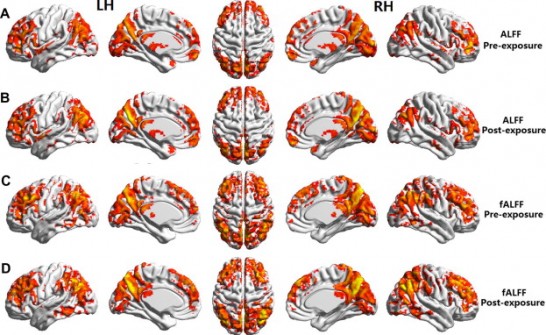
Brain images pre- and post-LTE (4G) exposure
Activist Post

The first study on the short-term effects of Long Term Evolution (LTE), the fourth generation cell phone technology, has been published online in the peer-reviewed journal, Clinical Neurophysiology. (1)

In a controlled experiment, researchers exposed the right ear of 18 participants to LTE cellphone radiation for 30 minutes. The source of the radiation was 1 centimeter from the ear, and the absorbed amount of radiation in the brain was well within international (ICNIRP) cell phone legal limits.

The researchers employed a double-blind, crossover, randomized and counter-balanced design to eliminate any possible study biases.The resting state brain activity of each participant was measured by magnetic resonance imaging (fMRI) at two times — after exposure to LTE microwave radiation, and after a sham exposure.

The results demonstrated that LTE exposure affected brain neural activity not only in the closer brain region but also in the remote region, including the left hemisphere of the brain. The study helps explain the underlying neural mechanism for the remote effects of microwave radiation in the brain.

In 2011, Dr. Nora Volkow, Director of the National Institute on Drug Abuse, published a similar study in the Journal of the American Medical Association that received worldwide news coverage. Dr. Volkow reported that a 50 minute exposure to CDMA, a second generation cell phone technology, increased brain activity in the region of the brain closest to the cell phone. (2)

The current study establishes that short-term exposure to LTE microwave radiation affects the users’ brain activity. Although LTE is too new for the long-term health consequences to have been studied, we have considerable evidence that long-term cell phone use is associated with various health risks including increased risk of head and neck cancers, sperm damage, and reproductive health consequences for offspring (i.e., ADHD).

Cell phone users, especially pregnant women and children, should limit their cell phone use. Moreover, cell phone users should not keep their phones near their head, breasts or reproductive organs when using the phone or whenever the phone is turned on unless it is in airplane mode.

For more information about the health effects of cell phone radiation see my Electromagnetic Radiation Safety Web site at http://www.saferemr.com/.

Joel M. Moskowitz, Ph.D.
School of Public Health Health
University of California, Berkeley

Electromagnetic Radiation Safety

Website: http://www.saferemr.com
Facebook: http://www.facebook.com/SaferEMR
Twitter: @berkeleyprc

References

(1) Bin Lv, Zhiye Chen, Tongning Wu, Qing Shao, Duo Yan, Lin Ma, Ke Lu, Yi Xie. The alteration of spontaneous low frequency oscillations caused by acute electromagnetic fields exposure. Clinical Neurophysiology. Published online 4 September 2013.

Abstract

Objective The motivation of this study is to evaluate the possible alteration of regional resting state brain activity induced by the acute radiofrequency electromagnetic field (RF-EMF) exposure (30 min) of Long Term Evolution (LTE) signal.

Methods We designed a controllable near-field LTE RF-EMF exposure environment. Eighteen subjects participated in a double-blind, crossover, randomized and counterbalanced experiment including two sessions (real and sham exposure). The radiation source was close to the right ear. Then the resting state fMRI signals of human brain were collected before and after the exposure in both sessions. We measured the amplitude of low frequency fluctuation (ALFF) and fractional ALFF (fALFF) to characterize the spontaneous brain activity.

Results We found the decreased ALFF value around in left superior temporal gyrus, left middle temporal gyrus, right superior temporal gyrus, right medial frontal gyrus and right paracentral lobule after the real exposure. And the decreased fALFF value was also detected in right medial frontal gyrus and right paracentral lobule.

Conclusions The study provided the evidences that 30 min LTE RF-EMF exposure modulated the spontaneous low frequency fluctuations in some brain regions.

Significance With resting state fMRI, we found the alteration of spontaneous low frequency fluctuations induced by the acute LTE RF-EMF exposure.

http://www.ncbi.nlm.nih.gov/pubmed/24012322

(2) Volkow ND, Tomasi D, Wang GJ, Vaska P, Fowler JS, Telang F, Alexoff D, Logan J, Wong C. Effects of cell phone radiofrequency signal exposure on brain glucose metabolism. JAMA. 2011 Feb 23;305(8):808-13. doi: 10.1001/jama.2011.186.

Abstract

CONTEXT: The dramatic increase in use of cellular telephones has generated concern about possible negative effects of radiofrequency signals delivered to the brain. However, whether acute cell phone exposure affects the human brain is unclear.

OBJECTIVE: To evaluate if acute cell phone exposure affects brain glucose metabolism, a marker of brain activity.

DESIGN, SETTING, AND PARTICIPANTS: Randomized crossover study conducted between January 1 and December 31, 2009, at a single US laboratory among 47 healthy participants recruited from the community. Cell phones were placed on the left and right ears and positron emission tomography with ((18)F) fluorodeoxyglucose injection was used to measure brain glucose metabolism twice, once with the right cell phone activated (sound muted) for 50 minutes (“on” condition) and once with both cell phones deactivated (“off” condition). Statistical parametric mapping was used to compare metabolism between on and off conditions using paired t tests, and Pearson linear correlations were used to verify the association of metabolism and estimated amplitude of radiofrequency-modulated electromagnetic waves emitted by the cell phone. Clusters with at least 1000 voxels (volume >8 cm(3)) and P < .05 (corrected for multiple comparisons) were considered significant.

Photo: http://www.prlog.org/12215083/1

MAIN OUTCOME MEASURE: Brain glucose metabolism computed as absolute metabolism (μmol/100 g per minute) and as normalized metabolism (region/whole brain).

RESULTS: Whole-brain metabolism did not differ between on and off conditions. In contrast, metabolism in the region closest to the antenna (orbitofrontal cortex and temporal pole) was significantly higher for on than off conditions (35.7 vs 33.3 μmol/100 g per minute; mean difference, 2.4 [95% confidence interval, 0.67-4.2]; P = .004). The increases were significantly correlated with the estimated electromagnetic field amplitudes both for absolute metabolism (R = 0.95, P < .001) and normalized metabolism (R = 0.89; P < .001).

CONCLUSIONS: In healthy participants and compared with no exposure, 50-minute cell phone exposure was associated with increased brain glucose metabolism in the region closest to the antenna. This finding is of unknown clinical significance.

Dogs: An Uncomplicated Relationship

Dogs: an uncomplicated relationship

Beyond simply being hairy, smelly love machines, a growing body of research shows that dogs may be even more in tune with us than we previously thought  
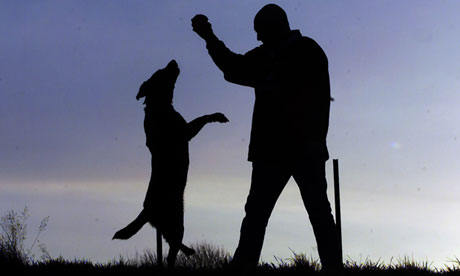
An owner playing with his dog

Dogs seem to form strong emotional attachments to their owners in much the same way as human babies do to their mothers. Photograph: Christopher Thomond for the Guardian
Recently Pete Etchells posted about our complicated relationship with cats so, to balance the score, this week I'm going to tell you why our relationship with dogs seems so uncomplicated.

Dogs read our body language

Human babies understand that pointing and gaze direction are indications of what's going in another person's mind. To examine whether this skill is learned or inborn, research has explored these capabilities in our closest evolutionary relatives – chimpanzees and bonobos.

The classic test is to hide a treat in one of two locations then point to where it is. Children from just over a year old will have no difficulty recognising this signal and will come and claim it. Chimps do no better than randomly choosing between the two locations, completely ignoring the cue.

Given that chimps seem to struggle with this task, it was widely assumed that it couldn't possibly have evolved in other, "lower" animals. Do this experiment with your cat and she will probably gaze uncomprehendingly at your finger for a while.

Imagine researchers' great surprise then when it was revealed that dogs, who are miles away from us on the evolutionary tree, passed this task with flying colours. Hide a treat in one of two locations and point at it and dogs will reliably bound over and gobble it up, even when the treats don't smell of anything.

Not only that! If you stand a long distance away and point, dogs will unfailingly go to the right location. If you simply bow or nod in that direction, they get it. If you look at one hiding place rather than another, they get it. Perhaps most impressively, if you walk in one direction and point in the other, they still get it.

Dogs know what grabs our attention

Another test of mind-reading ability is knowing what someone is paying attention to. Given the option of begging food from two people – one who has seen where the food is hidden and one who has a bucket on his head – chimps will randomly go to either one. Dogs, on the other hand, will consistently choose the person who can see.

If you have a dog you can try this yourself. Throw a ball and then turn away and the dog will almost invariably come round and drop the ball in front of you, where you can see it. This indicates that dogs are not just playing with their humans, they are also keeping track of what their humans are looking at and how best to get their attention. This sort of gaze-reading ability can take months to develop in young children and may never develop in non-human primates.

Dogs love us

Like cats, dogs also seem to form strong emotional attachments to their owners in much the same way as human babies do to their mothers. The typical test of babies' attachment is to plonk them down in an unfamiliar environment and see how they fare. If babies have a strong emotional attachment to their mothers they will explore the new environment, returning to her regularly for reassurance, get terribly upset if she leaves the room but be quickly consoled when she returns.

Dogs show an almost identical pattern of responses with respect to their owners – sniffing about, returning to the owner, pawing the door and whining when the owner leaves followed by exuberant greetings on their return. Like babies they are distrustful of strangers in the room with them and tend to show signs of increasing distress the longer their owner is away.

Dogs listen to us

Finally there is some evidence that a couple of precocious pooches may have that most quintessential of human skills – comprehending language. Rico, a border collie, has been shown to differentiate at least 200 different labels for objects, an astonishing vocabulary for a canine.

 Chaser, another collie, understands more than 1,000 different words! Both will bring you the toy you ask for from a huge selection and will do so even if you instruct them out-of-sight. This means they are not simply picking up on unconscious non-verbal signals.

If you present these dogs with a familiar toy and a new object, then ask them to fetch the "dax" – a word they won't have heard before – they will reliably bring you the new toy rather than one they already know the name for.

This sort of inference is called "fast-mapping" and is thought to be the skill that underlies human children's astonishing speed of language acquisition in early childhood. But even human children don't show this ability to the same degree as Rico and Chaser until about 2-3 years of age.

That dogs are so surprisingly proficient at reading human communication might come as no surprise to dog owners but has been something of a revelation for psychologists interested in how these skills have evolved. What is especially surprising is that they seem much less developed in our closest genetic relatives – non-human primates for humans and wolves for dogs. So these skills cannot be explained by any simple evolutionary model or by straightforward pack behaviour.

What we are finding is that the rudiments of what we thought of as particularly human social skills may have their roots much further back in evolution than previously expected. Alternatively, they may have evolved in different species independently. What seems increasingly clear is that dogs have maintained the reputation of being "man's best friend" not simply through our own benevolence but also through developing an impressive set of social skills that make them ever-sensitive to our whims and fancies.