

For related articles and more information, please visit OCA's All About Organics page, and our Genetic Engineering page.
The agribusiness giants would have us believe that our
inherently unsustainable and morally reprehensible factory farming
system is the only way to feed the world’s burgeoning population. But
the facts prove otherwise. Factory farming is all about maximizing profits for a handful of the world’s largest corporations.
Agribusiness spent $751 million over the past 5 years on lobbying congress and another $480.5 million in direct campaign contributions over the past two decades. Since 1995, taxpayers have provided $292.5 billion in direct agricultural subsidies, another $96 billion in crop insurance subsidies, and over $100 billion in subsidies to promote the growth of genetically engineered corn and soy.
Feeding huge numbers of confined animals actually uses more food, in the
form of grains that could feed humans, than it produces. For every 100
food calories of edible crops fed to livestock, we get back just 30
calories in the form of meat and dairy. That’s a 70-percent loss. And
recent research
from the University of Minnesota shows that reallocating croplands away
from fuels and animal feed could boost food available for people by 70
percent without clearing more land.
How did we end up with this cruel, unsustainable, unhealthy,
environmentally destructive factory farm model? The numbers say it all.
The Bigger the Farm, the Larger the Taxpayer Subsidy
$292.5 billion: Total amount of taxpayer subsidies given to farms from 1995-2012.
Only $39 billion: Total amount in conservation payments paid to farms between 1995 and 2012.
10: Percentage of farms in the U.S. that collected 75 percent of farm subsidies from 1995-2012.
62: Percentage of farms in the U.S. that did not collect any subsidy payments.
$32,043: Average annual subsidies received by the largest 10 percednt of farms between 1995 and 2012.
$604: Average annual subsidy received by the smallest 80 percent of farms between 1995 and 2012.
Insuring Factory Farms at Taxpayer Expense
$15.8 billion: Cost to U.S. taxpayers in 2012 for providing crop
insurance - an overwhelming majority of which went to the largest
factory farms.
$96.4 billion: Cost to U.S. taxpayers for subsidizing the Crop Insurance Program from 1995-2012.
$90 billion: Cost of crop insurance to U.S. taxpayers over the next 10 years.
75: Percentage of 2012 crop insurance payouts shouldered by taxpayers.
$10.3 billion: Amount since 2001 that insurance companies have enjoyed in underwriting gains – while taxpayers have lost $276 million.
$1 million: Average amount the 26 largest factory farms collected apiece in crop insurance premium support in 2011.
$227,000: The amount the top 1 percent of policyholders received in crop insurance subsidies in 2011.
$5,000: The amount the bottom 80 percent of policyholders collected in crop insurance subsidies in 2011.
More than 10,000: Number of
individual farming operations that received federal crop insurance
premium subsidies ranging from $100,000 to more than $1 million apiece
in 2011.
10: Percentage of farm businesses that received 54 percent of all insurance subsidies in 2011.
GMO animal feed subsidized by U.S. taxpayers
$84.4 billion: Amount in corn subsidies (88 percent of which is now genetically modified) provided in the U.S. from 1995-2012.
$27.8 billion: Amount in soy subsidies (94 percent of which is now genetically modified) provided in the U.S. from 1995-2012.
Legalized bribery: How American monopolies are built
$751 million: Amount in lobbying expenditures by the agribusiness lobby from 2008-2013.
$480.5 million: Amount the
agribusiness sector has contributed to federal candidates during the
past two decades, with two-thirds going to Republicans.
$43 million: Amount spent by the
Biotechnology Industry Organization (world’s largest biotech trade
association) on lobbying from 2008 to 2013.
$33 million: Approximate amount spent by Monsanto (who has patents on 95% of the genetically modified seed market) on lobbying since 2008.
$7.2 million: Amount just 14
members of Congress and their spouses (net worth of up to $124.5
million)—each of them Republican—have received in farm subsidies since
1995. These Congress members all voted to continue farm subsidies from
which they personally benefit, while allowing authorization for
nutrition programs for low income individuals and families, including
food stamps, to expire this year.
Sources:
2013 Farm Subsidy Database, Environmental Working Group
Pork Barrel Politics, By Congressman George Miller, July 2013
Agribusiness, Open Secrets
Monsanto Co, Open Secrets
Biotechnology Industry Association, Open Secrets
Winning the Debate against Factory Farming
Compiled by Zack Kaldveer, assistant media director for the Organic Consumers Association.
Showing posts with label Vote w your $$$. Show all posts
Showing posts with label Vote w your $$$. Show all posts
Thursday, January 16, 2014
FOOD Documentary A Revealing Look at the Sourcing of Our Modern Food Supply
By Dr Mercola
"Food" is a 30-minute documentary that investigates how demand for more and cheaper food has dramatically altered the entire food chain. Today, food production revolves around efficiency—the ability to produce more for less. The ramifications of this mindset are wide-ranging and far-reaching...
As KPBS’ Joanne Faryon reports, “the food chain no longer looks like it used to.” Fish no longer eat other fish, and cattle eat very little grass, which is their natural food source. Instead, cattle eat corn, chickens eat corn and fish, and fish eat cows and poultry... Similarly, fresh produce like fruits and vegetables are primarily sold to foreign markets.
California oranges, for example, are exported to far flung places like Japan, while Americans eat oranges from Australia—presumably because Americans prefer the deeper orange color of Australian oranges, and the fact that they’re easier to peel. As a result, the carbon footprint of most foods sold in your local grocery store is massive, having made its way thousands of miles from where it was grown.
The Beef About American Cattle Farming
While food prices appear to be on the rise, we actually spend less on our food today than we did a generation ago, thanks to modern food production practices. The ultimate price, however, may be greater than anyone ever expected.
For starters, modern agricultural practices are taking a heavy toll on soil and environmental health, and the way we raise animal foods, especially in the US, results in animal products that are far inferior compared to their ancestral past.
The practice of raising animals in confined feeding operations (CAFOs) is also having a major detrimental impact on our environment and is a primary source of environmental pollution and rising carbon dioxide levels in the atmosphere.
Last year, 63 million tons of beef was produced worldwide.1 As stated in the film, while making up only five percent of the world’s population, Americans consume nearly 20 percent of all the beef produced globally.
But just how is all this beef produced? The film summarizes how the typical cow makes its way from birth to slaughter in the US. A generation or so ago, cattle would be mostly pasture-raised and sold for slaughter around the age of two or three. The meat would then be taken to the local market.
Today, California cows start out being raised on pasture for about six months before being sold, typically changing hands twice, before ending up in a CAFO feedlot. Feedlots, which were introduced after World War II, are large pens that house tens of thousands of cattle—some can hold herds up to 100,000 animals.
Here, they’re fattened up on a corn-based diet before being slaughtered about four or five months later. All in all, today’s beef is grown in about half the time compared to a generation ago.
Besides corn, virtually all beef sold in American grocery stores comes from cattle injected with hormones. Corn fattens the cattle, but consumers don’t like all that gristly fat, so hormones are used to make the animal produce more lean muscle tissue. This improves profits, as it increases the animals’ growth by about 10 percent.
Ironically, as Faryon points out, it’s the corn that makes the cattle fat, so if we didn’t feed them corn, we wouldn’t have to give them hormones to minimize fat production. Another question well worth pondering is this: with all this hormone-laced beef, along with the American corn-based processed food diet (think high fructose corn syrup), is it any surprise Americans are growing fatter, faster, as well?
Farmed Fish—Feedlots of the Sea...
Industrial fish farming, or aquaculture, is the fastest growing form of food production in the world.2 About half of the world’s seafood now comes from fish farms, including in the US, and this is expected to increase. At first glance, farmed fish may seem like a good idea to help protect wild seafood populations from overfishing while meeting the nutritional needs of an ever-expanding global population.
In reality, however, the industry is plagued with many of the same problems surrounding land-based CAFOs, including pollution, disease and inferior nutritional quality. It’s getting so bad that fish farms can easily be described as “CAFOs of the sea.” Here we see an even greater distortion of the food chain. Wild fish eat other fish, but farmed fish can be fed a concoction of ingredients they’d NEVER encounter otherwise, such as soy protein and beef or chicken byproducts, including cattle blood, bone, and chicken feathers.
The reason for this is because, as explained by Jeffrey Graham in the film, it takes about five pounds of fish to produce one pound of growth in salmon. This clearly negates the original rationale for fish farming, which is to prevent the depletion of natural fish stocks. The solution is to replace the fish meal in the diet with soy protein and other protein products...The question is, is this really a healthy solution?
Europe has banned processing byproducts from cattle due to the potential risk of spreading mad cow disease (bovine spongiform encephalopathy, or BSE), a neurodegenerative disease that can affect humans eating contaminated beef. While there have been no reports of humans contracting mad cow from eating farmed fish, the theoretical possibility is there. Besides that, it seems clear that a fish that eats meat byproducts opposed to its natural diet of other fish is not going to have the same nutritional makeup as wild fish.
Then there’s the increased risk of fish diseases spreading to wild fish. The close quarters where farmed fish are raised (combined with their unnatural diets) means disease can spread quickly, and because farmed fish are often raised in pens in the ocean, pathogens can spread like wildfire and contaminate any wild fish swimming past. I wrote about this last summer in the article “Salmon Confidential.”
The Unsavory Truth About Factory Farmed Chicken
Large commercial chicken facilities typically house tens of thousands of hens and can even go up to hundreds of thousands of hens who, yet again, are fed a diet consisting primarily of corn. Processing byproducts such as chicken feathers can also be added to the feed. Antibiotics are routinely used in most facilities, but hormones are not permitted in American-raised chickens. When it comes to labels such as “free-range” and “natural,” it’s buyer beware...
The definitions of "free-range" are such that the commercial egg industry can run industrial farm egg laying facilities and still call them "free-range" eggs, despite the fact that the birds' foraging conditions are far from what you'd call natural. True free-range eggs are from hens that roam freely outdoors on a pasture where they can forage for their natural diet, which includes seeds, green plants, insects, and worms.
When you’re housing tens of thousands of chickens, you clearly cannot allow them all to freely roam and scavenge for food outdoors. At best, CAFO hens may be let out into a barren outdoor lot for mere minutes a day. Your best source for pastured chicken (and fresh eggs) is a local farmer that allows his hens to forage freely outdoors. If you live in an urban area, visiting a local farmer’s market is typically the quickest route to finding high-quality chicken and eggs.
Can We Grow a Fair and Sustainable Food System?
Many believe the answer to world hunger is further expansion of large-scale agriculture; others place their bets on genetically engineered (GE) crops. But are factory farms and large-scale GE farming really going to solve the problem? Evidence suggests the answer is a resounding NO. In fact, our modern agricultural system is the very heart of the problem...
Modern monoculture has severely depleted soils of essential nutrients and microorganisms, and poor soil quality is a core problem facing farmers across the globe. Monoculture (or monocropping) is defined as the high-yield agricultural practice of growing a single crop year after year on the same land, in the absence of rotation through other crops. (Corn, soybeans, wheat, and to some degree rice, are the most common crops grown with monocropping techniques. As discussed above, corn and soy are two of the primary ingredients in feed given to livestock, be they chickens, cattle or fish.)
The Earth's soil is now depleting at more than 13 percent the rate it can be replaced due to our chemical-based agriculture system. Massive monoculture has also led to the extinction of 75 percent of the world's crop varieties over the last century. Additionally, modern agriculture is extremely energy dependent. It is estimated that every consumer in the Western world eats the equivalent of 66 barrels of oil per year. That's how much oil is needed to produce the food on your plate.
Do You Really Want to Eat Factory Farmed Animals?
If you were to grow food for you own family, my guess is that you would do so with extreme care, using the best seeds, the healthiest animals, and the least amount of chemical additives. Yet, when most people buy their food, they have no idea where it actually comes from, and conversely the people who grow this food have no idea who ends up eating it. When people are able to grow food for the faceless masses, I think it somehow justifies these terrible practices that have become commonplace: pumping animals full of hormones and drugs, dousing vegetables with chemical pesticides and fertilizers, and introducing genetically modified seeds into the environment.
If you had to see the animal you were about to eat before it makes its way to the supermarket or your dinner table, would you choose one that had lived out its days in a filthy, crowded cage? One that had been mutilated and tormented, then pumped full of hormones and antibiotics, while being fed pesticide-laden grains it was not designed to eat?
Or would you choose one that had lived a nurtured and well cared for life, free to roam on pasture, see the sunlight and breathe in fresh air? One that was fed its natural diet and nothing more? The choice is obvious, which is exactly why agri-business has done such a masterful job of concealing what really goes on from the vast majority of Americans. All you see is a cellophane-wrapped package, maybe a picture of a barn with happy cows and chickens standing near. In many cases, if you could really see how that animal was raised, you would likely shield your children’s eyes, then turn away in disgust.
Factory farms allow us to be removed from taking personal responsibility for raising our own food. There is no one to be held accountable for raising garbage food or treating animals inhumanely because the system has taken on a life of its own. By far, the vast majority of food at your local supermarket comes from these polluting, inhumane farm conglomerations. So if you want to stop supporting them, you first need to find a new place to shop.
Become Part of a Growing Movement
Fortunately, it’s relatively easy to find a humane and reliable source for your food -- sources that are growing food with the health of the environment and the animals as the driving forces. At LocalHarvest.org, for instance, you can enter your zip code and find farmers' markets, family farms, and other sources of sustainably grown food in your area, all with the click of a button. For an excellent list of sustainable agricultural groups in your area, please also see Promoting Sustainable Agriculture -- this page is filled with resources for high-quality produce and meats in your area.
The more we all make it a point to only buy food from a source we know and trust, the faster factory farming will become a shameful practice of the past. Farmers and lovers of real food show us that change IS possible. But your involvement is required. Here are a few suggestions for how you can take affirmative action:
Buy local products whenever possible. Otherwise, buy organic and fair-trade products.
Shop at your local farmers market, join a CSA (Community Supported Agriculture), or buy from local grocers and co-ops committed to selling local foods.
Support restaurants and food vendors that buy locally produced food.
Avoid genetically engineered (GMO) foods. Buying certified organic ensures your food is non-GM.
Cook, can, ferment, dry, and freeze. Return to the basics of cooking, and pass these skills on to your children.
Grow your own garden, or volunteer at a community garden. Teach your children how to garden and where their food comes from.
Volunteer and/or financially support an organization committed to promoting a sustainable food system.
Get involved in your community. Influence what your child eats by engaging the school board. Effect city policies by learning about zoning and attending city council meetings. Learn about the federal policies that affect your food choice, and let your congressperson know what you think.
Spread the word! Share this article with your friends, family, and everyone else you know.
Sunday, January 12, 2014
Los Angeles May Become Largest GMO FREE Area In US

Los Angeles is considering a ban on the cultivation, sale and distribution of genetically modified organisms, which would make the city the largest GMO-free zone in the US.
Los Angeles City Councilmen Paul Koretz and Mitch O’Farrell introduced Friday a motion to curb growth and proliferation of GMO seeds and plants within the city.
The councilmen said the proposal aims to protect local gardens and city-grown food from future contamination from GMO seeds. The motion would not impact the sale of food containing GMO ingredients, however.
GMO seeds are mostly used only by large-scale farming operations, of which none exists in Los Angeles city.
"The pending ordinance would be symbolic more than anything else, but we do feel it's an important step to have the second-largest city in the nation declare itself as against genetically modified seeds," said head of Learning Garden and Seed Library of LA David King, who assisted in creating the motion.
King told The Huffington Post that if GMO seeds begin to be marketed to smaller farmers, the ban would be in place to protect home-grown food.
O’Farrell said suspicions that powerful new pesticides - incorporated into plant DNA via genetic engineering - have devastated worldwide honeybee populations by 40 to 50 percent in 2012 is the “canary in the coal mine” for GMOs. California’s almond crop, which supplies 80 percent of US almonds, has fallen on tough times given almonds rely so much on bees.
“A growing number of problems are being traced to GMOs," Koretz said in a statement. He cited examples like "the evolution of 'superbug' insects which are growing immune to the pesticides engineered within GMO crops" and "'seed drift' (for example the recent finding of GMO-pollinated wheat growing in an Oregon farmer’s field)."
Some smaller US localities have banned the cultivation of GMOs, but LA would be by far the biggest US city to do so.
Genetic engineering on plants, for example, occurs when a gene from another plant species, bacterium or virus is inserted into the organism's DNA.
An international group of over 90 scientists, academics and physicians released a statement early this week saying there is no scientific consensus on the safety of GMOs for humans, as proponents like Monsanto attest, and that any GMO cultivation should take internationally-approved precautions.
“The claim that it does exist is misleading and misrepresents the currently available scientific evidence and the broad diversity of opinion among scientists on this issue,” the statement said.
“Moreover, the claim encourages a climate of complacency that could lead to a lack of regulatory and scientific rigour and appropriate caution, potentially endangering the health of humans, animals, and the environment.”
A public effort to require all GMO foods and seeds to be labeled as such throughout the entire state of California failed a year ago. Opponents of Proposition 37 - like Monsanto and Kraft - helped donate around $46 million to the cause against labeling. Supporters of labeling raised just over $9 million in that defeat.
Voters in Washington State will consider a labeling requirement next month. Opponents of Initiative 522 - led by questionable fundraising tactics by industry trade group Grocery Manufacturers Association - have pumped $17 million into the effort to defeat labeling. Supporters have raised over $5 million.
A lawsuit filed by the state against the GMA claimed that the group violated campaign disclosure laws, and forced it to reveal donors to its “Defense of Brands Strategic Account.”
Out of the 34 companies who doled out over $7.2 million into the initiative the top three were PepsiCo, which contributed $1.6 million, and Nestle USA, Inc. and The Coca-Cola Co., which spent over $1 million each.
Thursday, January 2, 2014
An Inconvenient Tooth a Fluoride Documentary
Published on Sep 8, 2012
An Inconvenient Tooth is a documentary film about fluoride. It was released September 6th, 2012 at the City Hall in Portland, Oregon. http://AnInconvenientTooth.org
Fluoride Is Hazardous Waste
Soft Killing The American People Using Toxic Food, Toxic Water And Toxic Vaccines
Michael Snyder
RINF Alternative News
Have you noticed that there has been an absolute explosion in the number of people developing chronic illnesses, heart disease, diabetes and cancer?
If you are like most Americans, you probably have quite a few family members and friends that are seriously ill right now. Sadly, most Americans have absolutely no idea why this is happening. Most of them just assume that all of this sickness is just “normal”. But that is not the case at all.
The truth is that we are slowly killing ourselves by what we eat, by what we drink and by what we allow to be injected into our bodies. The vast majority of people out there have never even heard about the dangers posed by aspartame, fluoride, genetically-modified food, pesticides, high fructose corn syrup, pharmaceutical drugs, cell phones and toxic vaccines.
Most of them have no idea that our food is toxic, our water is toxic and our vaccines are toxic. Right now, it is estimated that approximately70,000 chemicals are being used for commercial purposes, and as a result of our “modern lifestyles” we are literally being endlessly bombarded with toxins. This has resulted in a massive tsunami of death, disease and chronic illness in America. But very few people actually understand what is being done to all of us.
The following are just a few of the ways that the “soft killing” of the American people is taking place…
Toxic Food
Do you believe that “you are what you eat”?
Well, have you ever considered what the animals that you eat are being fed?
If you are like most Americans, you will probably eat beef several times this week. But most Americans have no idea that our cows are being fed sawdust, chicken poop, candy, crab guts, limestone and dead cows that have been ground up on a regular basis.
Of course this is not true of all beef that you purchase at the grocery store.
But how do you tell which is which? And if you go for the lowest price beef, there is a greater chance that you are getting beef from cows that have literally been fed garbage.
And of course it isn’t just cows that are being fed poop. The truth is that there is a tremendous amount of it in many of our food products. If you doubt this, just check out this article: “There Is A Staggering Amount Of Feces In Our Food“.
Sometimes, it is the ingredients that are actually listed on the side of the box that are the most dangerous. Take aspartame for example. Once upon a time, it was listed as a biochemical warfare agent by the Pentagon.
But now it is in thousands of food products in our grocery stores.
So is it safe for us to eat? According to an article on Mercola.com, it has a long track record of causing adverse reactions and the government refuses to do anything about it…
Do you know what is in the water that you drink?
If not, perhaps you should do some investigating. According to one recent survey, our drinking water is absolutely littered with dangerous contaminants…
After reading all this, you may never look at water the same way again.
Do you remember Erin Brockovich? Well, according to the Washington Postthe carcinogen that she was so concerned about has been found in the drinking water of most U.S. cities…
Not only is there hexavalent chromium in our drinking water, the reality of the matter is that there are thousands of other chemicals and prescription drugs in our water supply as a Time Magazine article from a while back detailed…
So precisely how dangerous is fluoride?
Well, the Fluoride Dangers blog puts it this way….
So is fluoride in the water that you are drinking?
Perhaps you should find out.
The Natural Health and Longevity Resource Center has published a list of ten of the most significant health problems that scientific studies have shown that fluoride causes…
Toxic Vaccines
Are the vaccines that you are allowing the doctors to inject into your children safe?
Today, in some areas of the country more than 30 vaccines are being given to young children before the age of 3.
30 vaccines.
That is absolute madness.
They are overloading the systems of these young babies with massive amounts of toxins and the results are predictable.
According to the Centers for Disease Control and Prevention, the number of children in the United States with autism has risen by 78 percent over the past decade.
I have personally read hundreds of testimonies of mothers losing their babies right after being vaccinated and children developing autism right after being vaccinated. Yet the medical community continues to vigorously deny the connection.
But without a doubt, the evidence is mounting. The following is an excerpt from a Huffington Post article about the danger of vaccines…
And many of those making these comments will not even know what thimerosal is or why countries all over the planet have banned thimerosal from their vaccines. The following comes from an article by Dawn Prate….
That is a very, very good question.
Unfortunately, in most states the authorities have doubled down on their efforts to force people to take these dangerous vaccines. In fact, a pregnant nurse in Pennsylvania was just fired for refusing to take a flu vaccine.
It is time that the American people heard the truth. You can find dozens of vaccine horror stories right here. Do your own research and come to your own conclusions. Don’t just blindly accept whatever the mainstream media tells you to believe.
And I don’t even have the space in this article to get into the study that showed a 40 percent increased risk of brain tumors from using cell phones, the connection between Wi-Fi and cancer, the chemtrails being sprayed all over the planet, or the incredible danger that genetically-modified food represents.
Without a doubt, an entire book could be written on how we are all being systematically poisoned.
So what do you think?
Is there anything that you would like to add to this discussion?
Please feel free to share your thoughts by posting a comment below
RINF Alternative News
Have you noticed that there has been an absolute explosion in the number of people developing chronic illnesses, heart disease, diabetes and cancer?
If you are like most Americans, you probably have quite a few family members and friends that are seriously ill right now. Sadly, most Americans have absolutely no idea why this is happening. Most of them just assume that all of this sickness is just “normal”. But that is not the case at all.
The truth is that we are slowly killing ourselves by what we eat, by what we drink and by what we allow to be injected into our bodies. The vast majority of people out there have never even heard about the dangers posed by aspartame, fluoride, genetically-modified food, pesticides, high fructose corn syrup, pharmaceutical drugs, cell phones and toxic vaccines.
Most of them have no idea that our food is toxic, our water is toxic and our vaccines are toxic. Right now, it is estimated that approximately70,000 chemicals are being used for commercial purposes, and as a result of our “modern lifestyles” we are literally being endlessly bombarded with toxins. This has resulted in a massive tsunami of death, disease and chronic illness in America. But very few people actually understand what is being done to all of us.
The following are just a few of the ways that the “soft killing” of the American people is taking place…
Toxic Food
Do you believe that “you are what you eat”?
Well, have you ever considered what the animals that you eat are being fed?
If you are like most Americans, you will probably eat beef several times this week. But most Americans have no idea that our cows are being fed sawdust, chicken poop, candy, crab guts, limestone and dead cows that have been ground up on a regular basis.
Of course this is not true of all beef that you purchase at the grocery store.
But how do you tell which is which? And if you go for the lowest price beef, there is a greater chance that you are getting beef from cows that have literally been fed garbage.
And of course it isn’t just cows that are being fed poop. The truth is that there is a tremendous amount of it in many of our food products. If you doubt this, just check out this article: “There Is A Staggering Amount Of Feces In Our Food“.
Sometimes, it is the ingredients that are actually listed on the side of the box that are the most dangerous. Take aspartame for example. Once upon a time, it was listed as a biochemical warfare agent by the Pentagon.
But now it is in thousands of food products in our grocery stores.
So is it safe for us to eat? According to an article on Mercola.com, it has a long track record of causing adverse reactions and the government refuses to do anything about it…
Aspartame accounts for over 75 percent of the adverse reactions to food additives reported to the FDA. Many of these reactions are very serious including seizures and death. A few of the 90 different documented symptoms listed in the report as being caused by aspartame include:
Headaches/migraines, dizziness, seizures, nausea, numbness, muscle spasms, weight gain, rashes, depression, fatigue, irritability, tachycardia, insomnia, vision problems, hearing loss, heart palpitations, breathing difficulties, anxiety attacks, slurred speech, loss of taste, tinnitus, vertigo, memory loss, and joint pain.
According to researchers and physicians studying the adverse effects of aspartame, the following chronic illnesses can be triggered or worsened by ingesting of aspartame: Brain tumors, multiple sclerosis, epilepsy, chronic fatigue syndrome, parkinson’s disease, alzheimer’s, mental retardation, lymphoma, birth defects, fibromyalgia, and diabetes.Toxic Water
Do you know what is in the water that you drink?
If not, perhaps you should do some investigating. According to one recent survey, our drinking water is absolutely littered with dangerous contaminants…
Researchers from the U.S. Geological Survey (USGS) and the U.S. Environmental Protection Agency (EPA) found that an astounding one-third of U.S. water systems contain traces of at least 18 unregulated and potentially hazardous contaminants, many of which are linked to causing endocrine disruption and cancer.Based on a nationwide survey of 25 unnamed water utilities, scientists found traces of the herbicide metolachlor, for instance, a pesticide commonly applied to conventional corn, soy, cotton, safflower, potato and other crops, as well as the heavy metal strontium, which is linked to causing bone problems. Other chemicals identified include so-called perfluorinated compounds like perfluorooctanoic acid (PFOA), which numerous scientific studies have found can cause thyroid disease and various types of cancer.
After reading all this, you may never look at water the same way again.
Do you remember Erin Brockovich? Well, according to the Washington Postthe carcinogen that she was so concerned about has been found in the drinking water of most U.S. cities…
An environmental group that analyzed the drinking water in 35 cities across the United States, including Bethesda and Washington, found that most contained hexavalent chromium, a probable carcinogen that was made famous by the film “Erin Brockovich.”Lovely, eh?
Not only is there hexavalent chromium in our drinking water, the reality of the matter is that there are thousands of other chemicals and prescription drugs in our water supply as a Time Magazine article from a while back detailed…
All told, there are about 3,000 prescription pharmaceuticals in use in the U.S. and thousands more over-the-counter drugs, not to mention creams and ointments we smear on and then shower off. “Between cosmetics, pharmaceuticals and other sources,” says John Spatz, commissioner of Chicago’s department of water management, “there are 80,000 potential combinations of chemicals.” It’s impossible to keep our drinking supply safe from a gusher like that.And I haven’t even gotten to fluoride yet, which is purposely being put into the water supplies of most U.S. cities.
So precisely how dangerous is fluoride?
Well, the Fluoride Dangers blog puts it this way….
Even small amounts of fluoride consumed from tap water can damage your bones, teeth, brain, disrupt your thyroid function, lower IQ and/or cause cancer, according to evidence revealed in a groundbreaking 2006 National Research Council (NRC) fluoride report produced by a panel of experts who reviewed hundreds of published fluoride studies.That certainly does not sound good.
So is fluoride in the water that you are drinking?
Perhaps you should find out.
The Natural Health and Longevity Resource Center has published a list of ten of the most significant health problems that scientific studies have shown that fluoride causes…
1. Fluoride exposure disrupts the synthesis of collagen and leads to the breakdown of collagen in bone, tendon, muscle, skin, cartilage, lungs, kidney and trachea.For much, much more on this, please watch a documentary entitled “An Inconvenient Tooth” that you can find on YouTube right here.
2. Fluoride stimulates granule formation and oxygen consumption in white blood cells, but inhibits these processes when the white blood cell is challenged by a foreign agent in the blood.
3. Fluoride depletes the energy reserves and the ability of white blood cells to properly destroy foreign agents by the process of phagocytosis. As little as 0.2 ppm fluoride stimulates superoxide production in resting white blood cells, virtually abolishing phagocytosis. Even micro-molar amounts of fluoride, below 1 ppm, may seriously depress the ability of white blood cells to destroy pathogenic agents.
4. Fluoride confuses the immune system and causes it to attack the body’s own tissues, and increases the tumor growth rate in cancer prone individuals.
5. Fluoride inhibits antibody formation in the blood.
6. Fluoride depresses thyroid activity.
7. Fluorides have a disruptive effect on various tissues in the body.
8. Fluoride promotes development of bone cancer.
9. Fluorides cause premature aging of the human body.
10. Fluoride ingestion from mouth rinses and dentifrices in children is extremely hazardous to biological development, life span and general health.
Toxic Vaccines
Are the vaccines that you are allowing the doctors to inject into your children safe?
Today, in some areas of the country more than 30 vaccines are being given to young children before the age of 3.
30 vaccines.
That is absolute madness.
They are overloading the systems of these young babies with massive amounts of toxins and the results are predictable.
According to the Centers for Disease Control and Prevention, the number of children in the United States with autism has risen by 78 percent over the past decade.
I have personally read hundreds of testimonies of mothers losing their babies right after being vaccinated and children developing autism right after being vaccinated. Yet the medical community continues to vigorously deny the connection.
But without a doubt, the evidence is mounting. The following is an excerpt from a Huffington Post article about the danger of vaccines…
It’s a fact that many children with ASD regressed following normal development just as they were receiving multiple vaccines at regular doctor visits. Health officials say the timing is entirely coincidental.
Regression usually occurs between 12 and 24 months, thoughone study found that some children show signs of autism as early as six months, but never before that age.
By six months of age, most U.S. children have received about 18 inoculations containing 24 vaccines against nine diseases. Over the next two years or so, they will receive another nine shots containing 14 vaccines against 12 diseases.
So whether a child regresses at six months, or 18 months, the tragedy happens during a period of intensive vaccination. In many cases, parents report that the child had an abnormal reaction after being vaccinated (seizures, spiking-fevers, diarrhea, lethargy, high-pitched screaming and/or other symptoms).Of course there will be many angry comments following this article denying that any of this is true.
And many of those making these comments will not even know what thimerosal is or why countries all over the planet have banned thimerosal from their vaccines. The following comes from an article by Dawn Prate….
“In 1977, a Russian study found that adults exposed to ethylmercury, the form of mercury in thimerosal, suffered brain damage years later. Studies on thimerosal poisoning also describe tubular necrosis and nervous system injury, including obtundation, coma and death. As a result of these findings, Russia banned thimerosal from children’s vaccines in 1980. Denmark, Austria, Japan, Great Britain and all the Scandinavian countries have also banned the preservative”So why is thimerosal not banned in the United States?
That is a very, very good question.
Unfortunately, in most states the authorities have doubled down on their efforts to force people to take these dangerous vaccines. In fact, a pregnant nurse in Pennsylvania was just fired for refusing to take a flu vaccine.
It is time that the American people heard the truth. You can find dozens of vaccine horror stories right here. Do your own research and come to your own conclusions. Don’t just blindly accept whatever the mainstream media tells you to believe.
And I don’t even have the space in this article to get into the study that showed a 40 percent increased risk of brain tumors from using cell phones, the connection between Wi-Fi and cancer, the chemtrails being sprayed all over the planet, or the incredible danger that genetically-modified food represents.
Without a doubt, an entire book could be written on how we are all being systematically poisoned.
So what do you think?
Is there anything that you would like to add to this discussion?
Please feel free to share your thoughts by posting a comment below
Tuesday, December 31, 2013
Is Monsanto Using 4-H to Brainwash Your Children About GMOs?
By Dr. Mercola
Monsanto is boasting its partnership with 4-H programs by giving a shout-out to “National 4-H Week.”1
This is not the first time Monsanto has used its clever propaganda to influence our nation’s youth. The Council for Biotechnology Information widely circulated a Biotechnology Basics Activity Book for kids, a disturbing and brightly colored obvious intent to 'educate' the children.
4-H is the country’s largest youth organization with more than 6 million members in 80 countries around the world, involving children from elementary school age through high school.
The organization is extremely influential to children, impacting their intellectual and emotional development through their numerous programs and clubs. Unfortunately, Monsanto is using its partnership with 4-H as a vehicle to worm its way into your child’s mind in order to influence her developing beliefs and values.
Children are like little sponges, soaking up everything they see and hear, which makes them particularly vulnerable to being sucked in by propaganda.
And the effects could be life-long—at least they’re intended to be. Indeed you’d be hard-pressed to convince an adult, who from childhood was taught the merits of genetically engineered foods, that there’s anything wrong with such alterations of the food supply.
If your child is involved in 4-H, it would be wise to monitor the messages she’s getting, given this organization’s corporate sponsors and alliances.
4-H is really the perfect vehicle for Big Ag to manipulate an entire generation, using tactics not that different from the youth indoctrination strategies employed by political extremists in order to gain children’s trust and then “groom” them however they wish.
Think about it—what better way to control the future of our food system than to brainwash 6.8 million impressionable youth into believing that genetically modified organisms (GMOs) are safe and beneficial, if not the answer to all the problems of the world?2
4-H Volunteers are Being Trained by Monsanto
The 4-H Youth Development Organization was originally set up by the US Department of Agriculture (USDA) to train the rural youth of America in hands-on skills like agriculture and raising animals, including the promotion of responsible animal husbandry and the cultivation of food resources in a responsible, ethical way.
The 4-H emblem, a four-leaf clover, is supposed to symbolize four actions (head, hands, heart, and health) as stated in their pledge:
“I pledge my head to clearer thinking, my heart to greater loyalty, my hands to larger service and my health to better living, for my club, my community, my country, and my world.”However, as noble as their original vision is, it remains vulnerable to the influences of its funders. Just as the USDA and other government agencies have a carefully crafted and well established revolving door arrangement with industry, 4-H is increasingly in the grips of the corporations that fund it—specifically, the agricultural, biotech, and junk food industries.
According to its 2012 Annual Report,3 4-H’s funding comes from a long list of donors that include Monsanto, Bill & Melinda Gates Foundation, Cargill, DuPont, United Soybean Board, Coca-Cola, and Pfizer. It doesn’t take much imagination to predict what sort of agenda 4-H would need to promote to keep its donors happy.
Pro-GMO propaganda would be easy to weave into 4-H’s program since they already occupy the role of teaching children the art of farming, and in their position of authority, children would never question it. Monsanto is now also training tens of thousands of 4-H volunteers, according to an article in 4-Traders:
“In 2007, Monsanto expanded its 4-H volunteerism support by funding state and regional development. More than 52,600 volunteers have attended Monsanto-supported forums and training events in 50 states, three US territories and four Extension regional forums.”
Monsanto Hijacks Government, Education and Science
Corporations like Monsanto are employing increasingly underhanded strategies to spread their self-serving propaganda across broader segments of society. Here are three prime examples:
Of course, if you are a large corporation trying to control the food supply, the younger you Consider the “Biotechnology Basics Activity Book” for kids, circulated by CBI (Council for Biotechnology Information).4 Its colorful pages and friendly cartoon characters spew outright lies about the “benefits” of genetic engineering for health, environment, world hunger and the future of farming.
- Hijacking Government Regulators: Conflicts of interest are rampant in government agencies, which have a revolving door with US federal regulatory agencies like the USDA, FDA, and EPA.
- Hijacking Higher Education: An ever-increasing percentage of funding for research at land grant universities now comes from private corporations, giving big companies a stronger foothold than ever in higher education. Corporations wield power over educational institutions by giving college leaders positions on their corporate boards, and by hiring scientists as paid consultants. As a result, academic freedom has gone out the window, conflicts of interest are rampant, and bias eclipses objectivity.
- Hijacking the Media: Organizations such as Science Media Centre and American Council on Science and Health feature scientific “experts” that are anything but independent, and have undisclosed and far-reaching affiliations with the biotech industry.
Monsanto is one of eight biotech companies behind the release of this 16-page children’s activity book, demonstrating just how low it will stoop. CBI claims to promote science-based information but is really just a shill for the biotech industry, for the purpose of advancing the pro-GMO agenda. Brainwashing children is a new low, even for Monsanto. They’re not satisfied with just poisoning our children’s bodies—now they’re trying to poison their minds as well. And history is quite clear about how easy it is to poison the minds of the young.
Hijacking the Minds of Our Youth
It is difficult to ignore the parallels when looking at how 4-H, the largest American youth organization, is being hijacked by big biotech corporations to fulfill an agenda—the worldwide takeover by GMOs. But when you consider that Monsanto has no problem with poisoning our children, destroying farmers, polluting oceans, and ruining the earth’s topsoil, it seems there is no limit to their avarice.
If the Nazi analogy seems far-fetched, consider that the German people would have felt the same way before they realized what was happening to them. These manipulations can be masterful and insidious. The best way to protect your child from corporate brainwashing is with YOUR watchful eye.
If corporations like Monsanto are successful in hijacking the minds of our youth, they will essentially be in control the decisions and behavior of the next generation—and there is nothing to stop them until a great deal of damage is done to you, your children and grandchildren, and our planet. This is why it is so critical for you to be involved in your children’s activities and take an active role in their education.
Do not fall into the trap of assuming that, just because they are involved with a “reputable” organization like 4-H, that they are getting unbiased and truthful information.
Vote with Your Pocketbook, Every Day
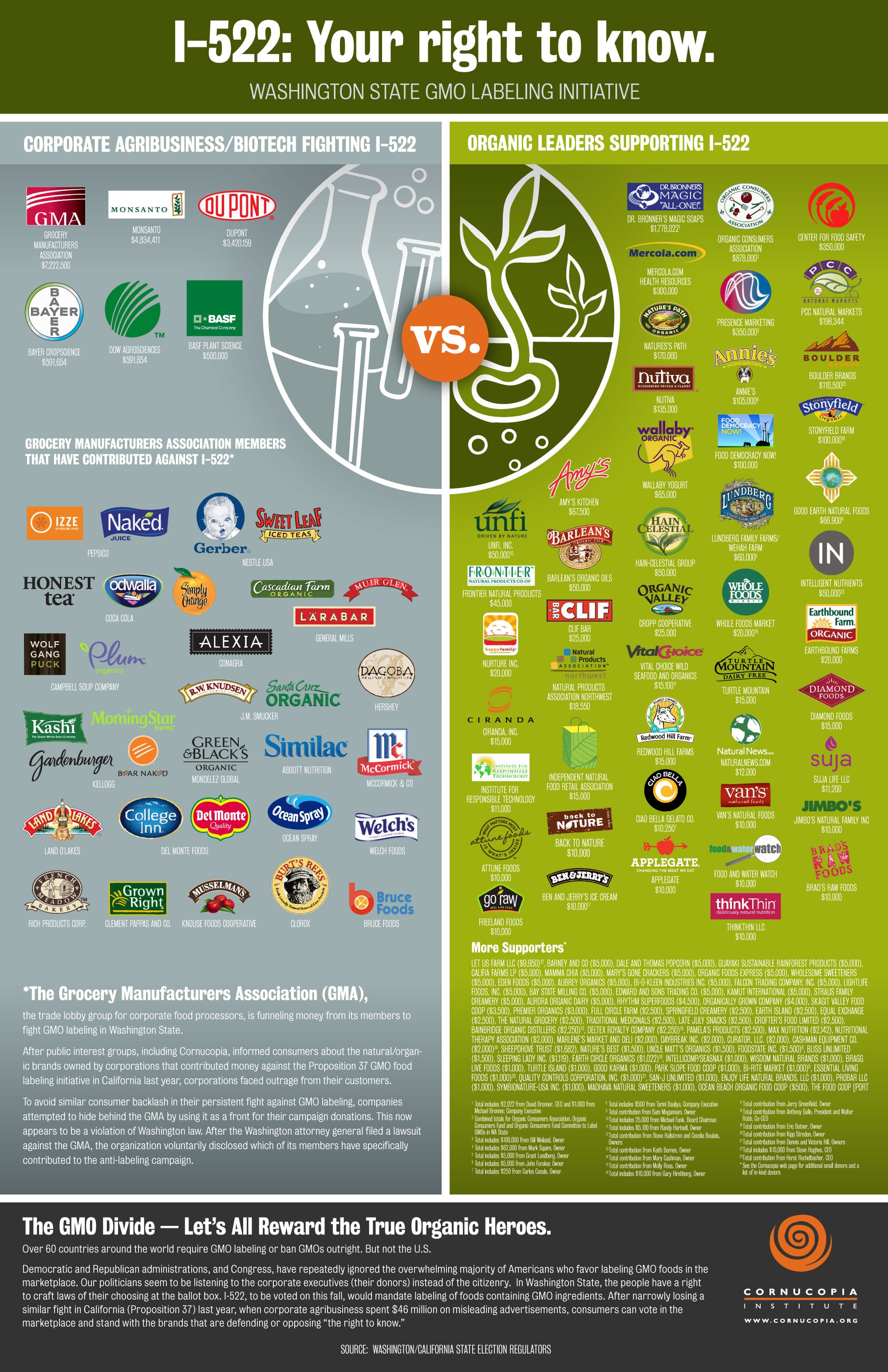
The food companies on the left of this graphic spent tens of millions of dollars in the last two labeling campaigns—in California and Washington State - to prevent you from knowing what’s in your food. You can even the score by switching to the brands on the right; all of whom stood behind the I-522 Right to Know campaign. Voting with your pocketbook, at every meal, matters. It makes a huge difference.
I encourage you to continue educating yourself about genetically engineered foods, and to share what you’ve learned with family and friends. Remember, unless a food is certified organic, you can assume it contains GMO ingredients if it contains sugar from sugar beets, soy, or corn, or any of their derivatives.
If you buy processed food, opt for products bearing the USDA 100% Organic label, as certified organics do not permit GMO’s. You can also print out and use the Non-GMO Shopping Guide, created by the Institute for Responsible Technology. Share it with your friends and family, and post it to your social networks.
Alternatively, download their free iPhone application, available in the iTunes store. You can find it by searching for ShopNoGMO in the applications. For more in-depth information, I highly recommend reading the following two books, authored by Jeffrey Smith, the executive director of the Institute for Responsible Technology:
For timely updates, join the Non-GMO Project on Facebook, or follow them on Twitter.
- Seeds of Deception: Exposing Industry and Government Lies about the Safety of the Genetically Engineered Foods You're Eating
- Genetic Roulette: The Documented Health Risks of Genetically Engineered Foods.
Please, do your homework. Together, we have the power to stop the biotech industry from destroying our food supply, the future of our children, and the earth as a whole.
All we need is about five percent of American shoppers to simply stop buying genetically engineered foods, and the food industry would have to reconsider their source of ingredients—regardless of whether the products bear an actual GMO label or not.
Thursday, October 31, 2013
Factory Farms :Taxpayers Pay, Politicians Take, Agribusiness Profits
 Organic Index 10.9.13
 Organic Consumers Association, October 9, 2013
‘Groundbreaking’ Work? Or Monsanto Madness?

GAINESVILLE, Fla. — Science is trying to build a better supermarket tomato.

Tomato plants grow from genetically modified tomato leaves.
David Manning for The New York Times
Harry J. Klee and his team are identifying genes
crucial to tomato flavor. Once crucial genes are identified, Dr. Klee’s
team uses traditional techniques of cross-pollination to produce a plant
with those genes.
At a laboratory here at the University of Florida’s Institute for Plant Innovation,
researchers chop tomatoes from nearby greenhouses and plop them into
glass tubes to extract flavor compounds — the essence of tomato, so to
speak. These flavor compounds are identified and quantified by machine.
People taste and rate the hybrid tomatoes grown in the university’s
fields.
“I’m 98 percent confident we can make a tomato that tastes substantially
better,” said Harry J. Klee, a professor of horticultural sciences. He
hopes that the fruits of his labor will be available to commercial
growers within four or five years and in supermarkets a couple of years
after that. He thinks he can make seeds for better tomatoes available to
home gardeners even sooner, within a year or two.
The insipid-tomato problem is well known both to salad lovers and scientists. For example, a gene mutation
that tomato breeders love because it turns the fruit a luscious red
also happens to make it blander. Refrigeration, transportation and other
factors also take their toll. Over the decades, the average tomato has
become not only less tasty but less nutritious.
Enter Dr. Klee, who helped found the Institute for Plant Innovation a
decade ago and has been in a quest for a more flavorful and nutritious
mass-market tomato ever since.
It is easy to find a better tasting and more nutritious tomato.
Go to a
farmer’s market or grow one in the backyard. It is also easy to breed a
plant that produces something tastier than a supermarket tomato — cross a
sweet heirloom with the supermarket variety. In the greenhouse, Dr.
Klee pulls one such hybrid tomato off a vine, and it does taste sweeter.
But a hybrid also loses some of the qualities highly valued by
commercial growers — it is not as fecund, not as resistant to disease,
not as easily grown, not as pretty.
As growers are paid by the pound, a better-tasting but less productive
tomato holds little economic appeal, and thus was the supermarket tomato
doomed to blandness.
Dr. Klee’s goal is to tweak the tomato DNA — through traditional
breeding, not genetic engineering — to add desired flavors while not
compromising the traits needed for it to thrive commercially. “I figure
that with approximately five key genes we could very significantly
improve flavor,” he said. He said three genes that control the
production of key flavor compounds have already been located. The next
step is to identify versions of the genes that lead the tomato plant to
produce more of them.
The chemistry of tomato flavor has three primary components: sugars,
acids and what are known as volatile chemicals — the flavor compounds
that waft into the air carrying the fruit’s aroma. There are more than
400 volatiles in a tomato, and Dr. Klee and his collaborators set out to
first determine which ones are the most important in making a tasty
tomato.
This involved grinding up a lot of tomatoes, looking at what was in
them, and asking a lot of people to taste them (unpulverized), gathering
comments like “a bland firm watermelon,” “soft and sloppy,” and “Sweet!
Finally a sample with some sweetness.”
From there, Dr. Klee and his collaborators, who include Linda Bartoshuk, director of human research at the university’s Center for Smell and Taste,
used statistics to correlate people’s preferences with the presence, or
absence, of particular flavor compounds, to devise a chemical recipe
for the ideal tomato.
The supermarket tomato — even when grown with care and picked ripe — did
not excel. “The best it will do is middle-of-the-pack,” Dr. Klee said.
Cherry Roma tomatoes were at the top of the charts, followed by heirloom
varieties like Matina, Ailsa Craig and Bloody Butcher. Other heirlooms
like Marmande and Oaxacan Pink ranked at the bottom, below the
supermarket tomatoes, though perhaps these particular types just do not
grow well in Florida.
The taste analysis produced several surprises. Some compounds, abundant
in many tomato varieties and thus thought to be major contributors to
flavor, turned out to be irrelevant, while others, in scant quantities,
had major influences. With the new knowledge, “you can’t help but get a
better tomato,” Dr. Bartoshuk said.
The most important attribute was sweetness. The sweeter the tomato, the
higher the rating. The biggest surprise, though, was that it was not
just sugar that made a tomato sweet. Some of the flavor compounds
enhanced the perception of sweetness.
That is the key to Dr. Klee’s plans. Tomato breeders have already tried
to maximize sugar, but the plants are bred to produce a lot of big
tomatoes all at once, and then do not have energy and sunlight through
photosynthesis to make enough sugar to go around.
The sweetness-enhancing compounds, however, are present in much smaller
quantities, so getting a plant to produce more of those is a much more
achievable goal, Dr. Klee said. (The compounds also offer promise for
sweetening other foods without adding the calories of sugar.)
“His work is really groundbreaking,” said James Giovannoni, a professor of plant biology at Cornell who studies the ripening of fruit and was one of the leaders in the sequencing of the tomato genome published last year.
He said Dr. Klee has been deciphering the molecular machineries in
tomatoes that produce the flavor compounds, and that is not an easy
task. “One, there is a lot of them,” Dr. Giovannoni said, “and two, a
lot of them are really not understood, how some of these produce these
compounds hasn’t been known.”
Modern genetic engineering has provided tools to study that, and
tomatoes are one of the most common plants that plant geneticists study,
much in the same way that animal geneticists focus on mice, and now
researchers can knock out particular compounds and see if they played a
key role in flavor or not.
There has been one genetically engineered tomato in the supermarket. In
the 1980s, plant geneticists at the University of California, Davis,
just as frustrated by bland tasting tomatoes, also tried to make a
better tomato. That led to a biotechnology company, Calgene, in 1994,
developing the Flavr Savr
tomato, the first genetically engineered food of any kind in the
supermarket, its DNA tweaked to inhibit a protein that turns a tomato
mushy over time. While it sold well, Calgene foundered in the logistics
of industrial agriculture and was bought by Monsanto, which discontinued
selling the seeds.
The Florida team is not repeating the Flavr Savr game plan.
Although Dr. Klee experiments with genetically engineered tomatoes to
test and confirm findings, he said that none of the ones eventually
destined for supermarkets will be — partly to avoid potential consumer
backlash and partly because his university cannot afford the estimated
$15 million that would be needed to obtain regulatory approval to sell a
genetically engineered tomato.
Instead, the tomato would be created through traditional breeding
techniques, but using genetic tests to determine which of the plants
possess the desired genes.
The quest for year-round produce at the supermarket has also led to
tomatoes being grown in less-than-ideal places — like Florida, where the
soil is too sandy and there are plenty of pests — when the traditional
tomato-growing areas farther north are too chilly.
Dr. Klee does not expect the improved tomato to taste as good as the
best heirlooms. Supermarket tomatoes would still be grown in large
quantities, picked green and shipped long distances before being gassed
with ethylene to ripen. In addition, the tomatoes are often mishandled
en route. Refrigeration, Dr. Klee notes, destroys the flavor compounds
in even the best tomato. “I might be able to get 75 percent” of the best
tomato in one that can be grown in greater quantities, he said.
Some traditional breeders are skeptical that Dr. Klee can do what he
thinks he can as quickly as he predicts. “I don’t think the taste of
tomatoes is going to be fixed by molecular biologists,” said David Francis,
a professor at The Ohio State University who has bred and released
several tomato varieties, “because flavor is a lot more complicated than
manipulating one or two genes.”
After working with tomatoes for so long, Dr. Klee admits he does not eat
many of them, but he does want the public to be able to buy appetizing
ones. Part of his quest is to get people to eat less junk food. If he
can improve the taste of tomatoes, he said, it could be an important way
to coax Americans to eat healthier foods.
Tomatoes aren’t the only focus of the Institute for Plant Innovation.
Researchers are working on a more fragrant rose, a project that involves
the genetic engineering feat of inserting — yes — a tomato gene in a
rose plant. They are also trying to grow tastier strawberries and
blueberries. One new blueberry variety could be described as positively
crispy, almost apple-like in its texture.
Consumers who tasted these blueberries liked their firmness, and the
quality is also a boon to growers, because the fruit lasts longer.
“It’s a blueprint,” Dr. Klee said of his tomato quest, “for a much bigger program of bringing back flavor.”
Why Dr. Bronner's is on a Soapbox for GMO Labeling~ The Fighting Soap Company!
On November 5, citizens in Washington State will vote on whether to require mandatory labeling of genetically engineered foods, also known as genetically modified organisms or GMOs. Win or lose, The Washington Right to Know Genetically Engineered Food Act is driving the national push on GMO labeling in states around the country as well as at the federal level—just as the narrowly defeated Prop 37 in California did last year.
Contrary to the misleading rhetoric and propaganda espoused by chemical companies like Monsanto and Dow that portrays GMO labeling on food packaging as costly and unnecessary, the truth is we have the right to know important information about our food, and such disclosures on packaging cost virtually nothing. We have the right to know whether juice is from concentrate or not; whether ingredients are artificial or not; whether fish is farmed or wild-caught. We also have the right to know if food is genetically engineered, in order to make informed decisions about what we eat and feed our families.
Chemical companies genetically engineer DNA from bacteria into food crops, causing the crops to either produce or tolerate the pesticides they sell. Overuse of pesticide is creating resistant superweeds and superbugs, which leads to more pesticides being sprayed. Now, chemical companies like Monsanto and Dow are engineering resistance in food crops to increasingly toxic weed killers like Dicamba and 2,4-D, the main ingredient in Agent Orange (which, coincidentally, both Monsanto and Dow also manufactured).
The bottom line is that genetic engineering of food crops is a pesticide industry boondoggle. Just six chemical companies have bought and now control the seed industry in this country, and their interest is to increase—not reduce—agchemical inputs. Rather than help farmers move toward more sustainable and less chemical intensive agriculture, genetic engineering has resulted in huge increases in pesticide use and residues of these chemicals in our food. Pesticide Action Network is a great resource on the link between GMOs and pesticides, and the next generation weed killer tolerant crops in the regulatory pipeline. Even the Wall Street Journal has reported on the recent spike in insecticide use.
Just this past week came news about Argentina's pesticide use and reported cancer clusters. In question: the huge increase in pesticide use—and consequential health impacts—since the widespread adoption of genetically engineered crops in Argentina. It's important to understand that no currently commercialized GMO traits, or any in the regulatory pipeline, have the effect of boosting yield to "feed the world." Rather, by far the most important in terms of acreage and revenue are traits designed to increase weed killer tolerance and the short-term profits of the chemical industry.
Additionally, of the five major crops that have been genetically engineered so far (corn, soy, cotton, canola and sugar beets), corn and soy are by far the most prevalent, as the number one and two crops farmed in the U.S. However, these crops are mostly not grown for human consumption.
Big Ag lobbies for and profits from unsustainable ethanol fuel mandates that result in 43 percent of total corn acreage going into inefficient ethanol production from GMO corn kernels (not cellulosic waste straw). Most of the remaining corn production, and much of the U.S. GMO soy crop, goes into animal feed. Industrial agchemical farming of GMO crops for fuel and animal feed only exacerbates world hunger. Study after study shows that agroecological organic methods of agriculture in the developing world can feed the world's population twice over while significantly boosting rural development (see the UN Report, "Agroecology and the Right to Food").
Industrial agchemical agriculture relies on finite fossil resources, is a huge contributor to global climate change, and is inevitably doomed. But there are billions to be made in the meantime polluting the world and killing our soil. Since agroecological methods are knowledge-intensive and are not patentable or profitable for Big Ag, chemical corporations spend millions to ensure national policy reinforces their chemical intensive and genetically patentable—but ultimately unsustainable—business model.
Last year, Dr. Bronner’s Magic Soaps joined a diverse, grassroots coalition of consumer groups, health advocates, and environmentalists in California in support of Proposition 37. Pesticide and junk food manufacturers spent more than $44 million to narrowly defeat the initiative with deceptive advertising. Despite its defeat, Proposition 37 sparked a national movement for the right to know whether foods contain GMOs, with states around the country considering or enacting legislation to do so. Connecticut and Maine have already passed GMO labeling laws, which, as stipulated in the legislation, will go into effect when at least five more New England states also pass such laws. Washington State is the next battleground with major agricultural sectors concerned that unlabeled genetically engineered wheat, apples, and salmon will compromise consumer trust in these foods.
To help spread the word about the importance of GMO labeling, we have transformed our iconic Dr. Bronner's Magic Soaps label for the castile liquid soaps into an advocacy label, to garner support for the Yes on 522 campaign to label GMOs in Washington, and to raise awareness for the importance of transparency in food labeling. For a limited time, wherever you buy Dr. Bronner's quart castile soaps, you'll find this GMO-Info label on the quart size bottles, and we hope you'll take a moment in the shower to read it.
As the "fighting soap company," we seek to push for a number of social issues that we feel are good. All our soaps are certified under the same USDA National Organic Program that certifies food, and all major ingredients (coconut, olive, palm, hemp and mint oils) are also certified Fair Trade. We cap executive compensation at five to one per our lowest paid position, and dedicate profits not needed for the business to charitable and activist causes.
We have prioritized labeling of genetically modified foods alongside supporting at-risk youth programs, re-commercializing industrial hemp, animal advocacy, fairness in trade, and other worthwhile efforts. My brother and I wrote this new GMO info label in the tradition of our grandfather, Dr. Emanuel Bronner, and his "All-One" philosophy, and on behalf of our commitment to healthy and sustainable agriculture, corporate accountability, and the consumers' right to know—all of which embody the social and ecological principles that inform the philosophy printed on the original castile liquid soap labels.
Whether you live in Washington, or elsewhere in the U.S., this is a food fight that affects all of us. Learn more about the GMO issue, support the Yes on 522 campaign in Washington, and join the growing movement to demand mandatory GMO labeling in your state and at the federal level.
Thursday, October 3, 2013
Monsanto Protection Act NOT Renewed

The so-called “Monsanto Protection Act” has been removed from a Senate spending bill to the delight of those opposed to the controversial provision.
The provision would have stayed on the books under a continuing resolution passed by the House of Representatives last week, but U.S. Sens. Barbara Mikulski, D-Md., and Jeff Merkley, D-Ore., led a successful charge to have the language removed from the Senate version of the bill.
“One week ago, I asked, ‘Who pulls more weight on Capitol Hill? The agrichemical companies like Dow and Monsanto, or the food movement?'” Elizabeth Kucinich, policy director for the Center for Food Safety, said in a statement. “Thanks to the leadership of Senator Barbara Mikulski we now know the answer: the food movement.”
Mikulski introduced an amendment to have the language of the bill changed to remove the “Monsanto Protection Act” removed. The amendment was approved earlier this week, and the provision will expire at the end of this month.
A massive groundswell of public opposition to the “Monsanto Protection Act” began in March, when news of its existence hit the mainstream.
The provision, officially Section 735 of the HR 933 continuing resolution passed in March, came under fire because food safety advocates warn that it strips federal courts of the authority to halt the sale and propagation of genetically modified seeds and crops if safety tests reveal concerns about their safety.
The legislation was written by Sen. Roy Blunt, R-Mo., in collaboration with Monsanto Company -- which has become the public face of the virulent debate over GMOs.
The furor over the “Monsanto Protection Act” and GMOs reached fever pitch in May, when hundreds of thousands of people participated in a global protest known as the March Against Monsanto. The company was even named 2013’s “most evil corporation” in a June poll, which was likely in large part a response to the controversy over the provision.
Mikulski’s amendment was not the first one aimed at repealing the “Monsanto Protection Act.” Sen. Jeff Merkley, D-Ore., introduced a similar amendment near the height of the controversy in May, but it was not adopted.
Interestingly, the Center for Food Safety blamed Mikulski for allowing the
provision to make it into continuing resolution via a “hidden backroom deal” back in March.
“In this hidden backroom deal, Sen. [Barbara] Mikulski turned her back on consumer,
environmental and farmer protection in favor of corporate welfare for biotech companies such as Monsanto,”
Andrew Kimbrell, executive director of the Center for Food Safety, wrote in a statement at the time. “This abuse of power is not the kind of leadership the public has come to expect from Sen. Mikulski or the Democrat Majority in the Senate.”
Outrage at the existence of the “Monsanto Protection Act” was intense even before the bill containing it was passed. In the days leading up to its being signed by President Barack Obama, more than 250,000 voters signed a petition asking him to veto the bill, and Food Democracy Now protesters organized by the Food Democracy Now advocacy group demonstrated against it in front of the White House.
Dave Murphy, founder and executive director of the Food Democracy Now advocacy group, lauded the Senate's move to remove the controversial provision.
“This is a major victory for the food movement and all those who care about openness and transparency in their government,” Murphy wrote in a statement. “And a sign that our voices can make the difference when we are effectively organized.”
Monsanto did not respond immediately to a request seeking comment on the new developments surrounding the “Monsanto Protection Act,” but Kelly J. Clauss, a spokeswoman for the company, sent a statement on the provision to IBTimes back in March.
“A broad bipartisan group of legislators in both the House and Senate have supported the provision dating back to June 2012, and it passed with broad bipartisan support,” Clauss explained at the time.
“As we understand it, the point of the Farmer Assurance Provision is to strike a careful balance allowing farmers to continue to plant and cultivate their crops subject to appropriate environmental safeguards, while USDA conducts any necessary further environmental reviews.”
This article will be updated if and when Monsanto responds to the request for comment.
UPDATE: In lieu of commenting, a Monsanto spokesman referred International Business Times to the company's blog post on the provision expiring. You can read that blog post here.
Vote YES I522 To Force Genetically Modified/Engineered Products To Be Labeled
I-522 UPDATE $17.1 Million Worth of Lies
How many lies will $17.1 million buy? Enough to sink another GMO labeling initiative?
Opponents of I-522, Washington State’s initiative to require mandatory labeling of GMOs, hope so. They’re banking on their ability to broadcast enough lies, often enough, to enough voters, to defeat I-522.
And if they do, the GMO labeling movement might not recover.
In 15 short days, Washington State voters will begin mailing in their ballots. In 33 days – on November 5 - it will all be over.
That’s all the time we have left to raise enough money to reach every voter in Washington State.
Our opponents are desperate. And filthy rich. A dangerous combination.
Their lies are familiar to us. But maybe not so to millions of voters who are hearing about GMOs for the first time.
Who are “they”? The NO on I-522 campaign is funded by Monsanto. Dow. Dupont. Bayer. BASF. And the Grocery Manufacturers Association (GMA). The GMA has kicked in $7.2 million on behalf of food companies like Pepsi, General Mills, Coca-Cola, Kraft and others – cowardly companies that are funneling their donations through the GMA to avoid the kind of bad publicity that came raining down on them last year, when they publicly donated to defeat a GMO labeling initiative in California.
Who are “we”? We are moms who want better food choices for our families. We are students. And grandparents. We are republicans, democrats, independents. We are blue-collar and white-collar workers. We are old. We are young.
We are fed up with letting Monsanto, the giant GMA lobbying group, the FDA and the USDA poison our food. And trample our rights.
We are the GMO labeling movement. And it’s up to us to win this key battle.
Still not sure why GMO is destroying the environment and your health? Check out this page or thousands of others that reveal how many countries around the world have banned it completely and the GM, or GE companies DEPEND on the US as their only suckers who still buy their garbage. Products afraid of labeling their ingredients? Why do they have to deceive?
Please share the word with all Washington Voters!
Saturday, September 28, 2013
Soy Tyranny Video
Soy Tryanny The Tyranny of Soy Agribusiness in Paraguay tells how Monsanto, Archer Daniels Midland, Cargill and a series of Brazilians agribusinesses are flexing their muscles in Paraguay, currently occupying 25% of all arable land for the production of genetically modified soy for export.
"The losers are Paraguay's peasant farmers, and they've mobilized to defend themselves, including getting a president into power who promised to help them."
U.S. Department of Agriculture guts national organic law
Joint statement of Consumers Union, Food and Water Watch, Beyond Pesticides and Center for Food Safety
U.S. Department of Agriculture Guts National Organic Law; Circumvents Public Process
Decision makes it easier to continue use of artificial ingredients and substances, undermining integrity of organic label
Under the federal organic law[1] and prior to Friday’s announcement, there was a controlled process for allowing the use of substances not normally permitted in organic production
because of extenuating circumstances.
These exemptions were supposed to be made for a five-year period, in order to encourage the development of natural (or organic) alternatives. The exemptions were required by law to expire, known as “sunset,” unless they were reinstated by a two-thirds “decisive” majority vote of the National Organic Standards Board (NOSB) and include a public review. This is no longer the case.
The USDA’s recent decision now puts the burden of identifying exempted materials for removal largely onto environmentalists and consumers. Under the new policy, an exempt material could be permitted indefinitely unless a two-thirds majority of the NOSB votes to remove an exempted (synthetic) substance from the list. The new policy allows USDA to relist exemptions for synthetic materials without the recommendation of the independent board and outside of public view, as required by current law.
“The USDA’s decision minimizes all incentives for creating organic, natural alternative ingredients and lowers the standard for what consumers can expect behind the organic label.
Allowing the USDA to automatically relist materials without the recommendation of the NOSB erodes the Board’s legal authority over materials decisions, a key to consumer trust in the organic label. The fact that the agency made this decision without any public input only adds to the violation felt by watchdog groups and consumers alike,” the groups said.
“Potentially allowing an indefinite listing of non-natural ingredients and requiring a super-majority vote to retire a substance after five years undermines the spirit of the law for how materials head into “sunset” or retirement. It is unfair to producers trying to produce a truly organic product and it is unfair to consumers trying to make meaningful purchasing decisions.
Simply put, this lowers the bar for much of the organic market. We believe the USDA must reverse course and we intend to mount a fierce campaign to hold the agency accountable to the millions of Americans who expect more from the government—and the organic label.”
[1]
The Organic Foods Production Act 7 USC 6517 (e) Sunset Provision – No
exemption or prohibition contained in the National List shall be valid
unless the National Organic Standards Board has reviewed such exemption
or prohibition as provided in this section within 5 years of such
exemption or prohibition being adopted or reviewed and the Secretary has
renewed such exemption or prohibition.
CONTACTS:
Urvashi Rangan, Ph.D. 914.378.2211, Consumers Union
Patty Lovera 202.744.0525, Food & Water Watch
Terry Shistar, Ph.D. 816.487.0022, Beyond Pesticides
Lisa Bunin, Ph.D. 831.425.7121, Center for Food Safety
NOTE: Personally, I believe the USDA organic certification to be diabolically worthless, whenever possible I reject it in favor of other organic certifications, which aren't ethically challenged.
Any produce you can buy directly from a natural farmer or grow yourself will go a long way to improve your food quality and safety. A small greenhouse, containers, wall gardening can produce an enormous amount of superior quality real food.
CONTACTS:
Urvashi Rangan, Ph.D. 914.378.2211, Consumers Union
Patty Lovera 202.744.0525, Food & Water Watch
Terry Shistar, Ph.D. 816.487.0022, Beyond Pesticides
Lisa Bunin, Ph.D. 831.425.7121, Center for Food Safety
NOTE: Personally, I believe the USDA organic certification to be diabolically worthless, whenever possible I reject it in favor of other organic certifications, which aren't ethically challenged.
Any produce you can buy directly from a natural farmer or grow yourself will go a long way to improve your food quality and safety. A small greenhouse, containers, wall gardening can produce an enormous amount of superior quality real food.
Subscribe to:
Posts (Atom)