Showing posts with label industrial food. Show all posts
Showing posts with label industrial food. Show all posts
Thursday, January 16, 2014
FOOD Documentary A Revealing Look at the Sourcing of Our Modern Food Supply
By Dr Mercola
"Food" is a 30-minute documentary that investigates how demand for more and cheaper food has dramatically altered the entire food chain. Today, food production revolves around efficiency—the ability to produce more for less. The ramifications of this mindset are wide-ranging and far-reaching...
As KPBS’ Joanne Faryon reports, “the food chain no longer looks like it used to.” Fish no longer eat other fish, and cattle eat very little grass, which is their natural food source. Instead, cattle eat corn, chickens eat corn and fish, and fish eat cows and poultry... Similarly, fresh produce like fruits and vegetables are primarily sold to foreign markets.
California oranges, for example, are exported to far flung places like Japan, while Americans eat oranges from Australia—presumably because Americans prefer the deeper orange color of Australian oranges, and the fact that they’re easier to peel. As a result, the carbon footprint of most foods sold in your local grocery store is massive, having made its way thousands of miles from where it was grown.
The Beef About American Cattle Farming
While food prices appear to be on the rise, we actually spend less on our food today than we did a generation ago, thanks to modern food production practices. The ultimate price, however, may be greater than anyone ever expected.
For starters, modern agricultural practices are taking a heavy toll on soil and environmental health, and the way we raise animal foods, especially in the US, results in animal products that are far inferior compared to their ancestral past.
The practice of raising animals in confined feeding operations (CAFOs) is also having a major detrimental impact on our environment and is a primary source of environmental pollution and rising carbon dioxide levels in the atmosphere.
Last year, 63 million tons of beef was produced worldwide.1 As stated in the film, while making up only five percent of the world’s population, Americans consume nearly 20 percent of all the beef produced globally.
But just how is all this beef produced? The film summarizes how the typical cow makes its way from birth to slaughter in the US. A generation or so ago, cattle would be mostly pasture-raised and sold for slaughter around the age of two or three. The meat would then be taken to the local market.
Today, California cows start out being raised on pasture for about six months before being sold, typically changing hands twice, before ending up in a CAFO feedlot. Feedlots, which were introduced after World War II, are large pens that house tens of thousands of cattle—some can hold herds up to 100,000 animals.
Here, they’re fattened up on a corn-based diet before being slaughtered about four or five months later. All in all, today’s beef is grown in about half the time compared to a generation ago.
Besides corn, virtually all beef sold in American grocery stores comes from cattle injected with hormones. Corn fattens the cattle, but consumers don’t like all that gristly fat, so hormones are used to make the animal produce more lean muscle tissue. This improves profits, as it increases the animals’ growth by about 10 percent.
Ironically, as Faryon points out, it’s the corn that makes the cattle fat, so if we didn’t feed them corn, we wouldn’t have to give them hormones to minimize fat production. Another question well worth pondering is this: with all this hormone-laced beef, along with the American corn-based processed food diet (think high fructose corn syrup), is it any surprise Americans are growing fatter, faster, as well?
Farmed Fish—Feedlots of the Sea...
Industrial fish farming, or aquaculture, is the fastest growing form of food production in the world.2 About half of the world’s seafood now comes from fish farms, including in the US, and this is expected to increase. At first glance, farmed fish may seem like a good idea to help protect wild seafood populations from overfishing while meeting the nutritional needs of an ever-expanding global population.
In reality, however, the industry is plagued with many of the same problems surrounding land-based CAFOs, including pollution, disease and inferior nutritional quality. It’s getting so bad that fish farms can easily be described as “CAFOs of the sea.” Here we see an even greater distortion of the food chain. Wild fish eat other fish, but farmed fish can be fed a concoction of ingredients they’d NEVER encounter otherwise, such as soy protein and beef or chicken byproducts, including cattle blood, bone, and chicken feathers.
The reason for this is because, as explained by Jeffrey Graham in the film, it takes about five pounds of fish to produce one pound of growth in salmon. This clearly negates the original rationale for fish farming, which is to prevent the depletion of natural fish stocks. The solution is to replace the fish meal in the diet with soy protein and other protein products...The question is, is this really a healthy solution?
Europe has banned processing byproducts from cattle due to the potential risk of spreading mad cow disease (bovine spongiform encephalopathy, or BSE), a neurodegenerative disease that can affect humans eating contaminated beef. While there have been no reports of humans contracting mad cow from eating farmed fish, the theoretical possibility is there. Besides that, it seems clear that a fish that eats meat byproducts opposed to its natural diet of other fish is not going to have the same nutritional makeup as wild fish.
Then there’s the increased risk of fish diseases spreading to wild fish. The close quarters where farmed fish are raised (combined with their unnatural diets) means disease can spread quickly, and because farmed fish are often raised in pens in the ocean, pathogens can spread like wildfire and contaminate any wild fish swimming past. I wrote about this last summer in the article “Salmon Confidential.”
The Unsavory Truth About Factory Farmed Chicken
Large commercial chicken facilities typically house tens of thousands of hens and can even go up to hundreds of thousands of hens who, yet again, are fed a diet consisting primarily of corn. Processing byproducts such as chicken feathers can also be added to the feed. Antibiotics are routinely used in most facilities, but hormones are not permitted in American-raised chickens. When it comes to labels such as “free-range” and “natural,” it’s buyer beware...
The definitions of "free-range" are such that the commercial egg industry can run industrial farm egg laying facilities and still call them "free-range" eggs, despite the fact that the birds' foraging conditions are far from what you'd call natural. True free-range eggs are from hens that roam freely outdoors on a pasture where they can forage for their natural diet, which includes seeds, green plants, insects, and worms.
When you’re housing tens of thousands of chickens, you clearly cannot allow them all to freely roam and scavenge for food outdoors. At best, CAFO hens may be let out into a barren outdoor lot for mere minutes a day. Your best source for pastured chicken (and fresh eggs) is a local farmer that allows his hens to forage freely outdoors. If you live in an urban area, visiting a local farmer’s market is typically the quickest route to finding high-quality chicken and eggs.
Can We Grow a Fair and Sustainable Food System?
Many believe the answer to world hunger is further expansion of large-scale agriculture; others place their bets on genetically engineered (GE) crops. But are factory farms and large-scale GE farming really going to solve the problem? Evidence suggests the answer is a resounding NO. In fact, our modern agricultural system is the very heart of the problem...
Modern monoculture has severely depleted soils of essential nutrients and microorganisms, and poor soil quality is a core problem facing farmers across the globe. Monoculture (or monocropping) is defined as the high-yield agricultural practice of growing a single crop year after year on the same land, in the absence of rotation through other crops. (Corn, soybeans, wheat, and to some degree rice, are the most common crops grown with monocropping techniques. As discussed above, corn and soy are two of the primary ingredients in feed given to livestock, be they chickens, cattle or fish.)
The Earth's soil is now depleting at more than 13 percent the rate it can be replaced due to our chemical-based agriculture system. Massive monoculture has also led to the extinction of 75 percent of the world's crop varieties over the last century. Additionally, modern agriculture is extremely energy dependent. It is estimated that every consumer in the Western world eats the equivalent of 66 barrels of oil per year. That's how much oil is needed to produce the food on your plate.
Do You Really Want to Eat Factory Farmed Animals?
If you were to grow food for you own family, my guess is that you would do so with extreme care, using the best seeds, the healthiest animals, and the least amount of chemical additives. Yet, when most people buy their food, they have no idea where it actually comes from, and conversely the people who grow this food have no idea who ends up eating it. When people are able to grow food for the faceless masses, I think it somehow justifies these terrible practices that have become commonplace: pumping animals full of hormones and drugs, dousing vegetables with chemical pesticides and fertilizers, and introducing genetically modified seeds into the environment.
If you had to see the animal you were about to eat before it makes its way to the supermarket or your dinner table, would you choose one that had lived out its days in a filthy, crowded cage? One that had been mutilated and tormented, then pumped full of hormones and antibiotics, while being fed pesticide-laden grains it was not designed to eat?
Or would you choose one that had lived a nurtured and well cared for life, free to roam on pasture, see the sunlight and breathe in fresh air? One that was fed its natural diet and nothing more? The choice is obvious, which is exactly why agri-business has done such a masterful job of concealing what really goes on from the vast majority of Americans. All you see is a cellophane-wrapped package, maybe a picture of a barn with happy cows and chickens standing near. In many cases, if you could really see how that animal was raised, you would likely shield your children’s eyes, then turn away in disgust.
Factory farms allow us to be removed from taking personal responsibility for raising our own food. There is no one to be held accountable for raising garbage food or treating animals inhumanely because the system has taken on a life of its own. By far, the vast majority of food at your local supermarket comes from these polluting, inhumane farm conglomerations. So if you want to stop supporting them, you first need to find a new place to shop.
Become Part of a Growing Movement
Fortunately, it’s relatively easy to find a humane and reliable source for your food -- sources that are growing food with the health of the environment and the animals as the driving forces. At LocalHarvest.org, for instance, you can enter your zip code and find farmers' markets, family farms, and other sources of sustainably grown food in your area, all with the click of a button. For an excellent list of sustainable agricultural groups in your area, please also see Promoting Sustainable Agriculture -- this page is filled with resources for high-quality produce and meats in your area.
The more we all make it a point to only buy food from a source we know and trust, the faster factory farming will become a shameful practice of the past. Farmers and lovers of real food show us that change IS possible. But your involvement is required. Here are a few suggestions for how you can take affirmative action:
Buy local products whenever possible. Otherwise, buy organic and fair-trade products.
Shop at your local farmers market, join a CSA (Community Supported Agriculture), or buy from local grocers and co-ops committed to selling local foods.
Support restaurants and food vendors that buy locally produced food.
Avoid genetically engineered (GMO) foods. Buying certified organic ensures your food is non-GM.
Cook, can, ferment, dry, and freeze. Return to the basics of cooking, and pass these skills on to your children.
Grow your own garden, or volunteer at a community garden. Teach your children how to garden and where their food comes from.
Volunteer and/or financially support an organization committed to promoting a sustainable food system.
Get involved in your community. Influence what your child eats by engaging the school board. Effect city policies by learning about zoning and attending city council meetings. Learn about the federal policies that affect your food choice, and let your congressperson know what you think.
Spread the word! Share this article with your friends, family, and everyone else you know.


Drug With Adverse Effects Used In American Beef since 2007
January 15, 2014
| |
While
the beta-agonist drug Zilmax (Zilpaterol) has been used to promote
muscle growth in American-grown cattle since 2007, news of the dramatic
adverse effects of this drug didn't hit mainstream news—and hence public
consciousness—until late last year.
In
early August, 2013, Tyson Food Inc issued a statement saying it would
no longer purchase Zilmax-fed cattle for slaughter due to animal welfare
concerns.
The company had noticed that many of the cows that had been fed the
drug had trouble walking. The cattle also displayed other behavioral
issues.
Since
then, Cargill Inc. has also decided to reject Zilmax-fed cattle until
it is confident that any animal welfare issues associated with the drug
have been resolved.
Merck,
the maker of the drug, initially said it would halt US and Canadian
sales of Zilmax, pending company research and review. It wasn't long
however before Merck announced it had no plans to discontinue the
product,3 saying the company stands behind the safety of the drug.
At
present, Merck does not need approval from the Food and Drug
Administration (FDA) to return Zilmax to market, as the FDA has not
taken any action against the drug.
Agricultural drug use has become a major health concern for animals and humans alike, and in my view, organic, grass-fed meat that is humanely raised and butchered is really the only type of meat worth eating, if you want to maintain good health.
It is important to understand that grass-fed animals not only produce better eggs, milk & meat - but the return to native perennial grasses is key to future. We destroyed most of the grasslands and replaced them with monocultures like corn and soy.
We then produce
hydrogenated vegetable oil and high fructose corn syrup for human
consumption, and use much of the remainder for feed in concentrated
animal feeding operations.
The grasslands act very much like forests, while deforestation is very well known the destruction of grasslands have similar effects. Perennial grass farming produces more nutritious products, while work in a perfect cycle with nature.
Special Report Reveals Shocking Side Effects of Zilmax
Beta-agonist
drugs such as Zilmax belong to a class of non-hormone drugs used as a
growth promoter in livestock. As a class, beta-agonist drugs have been
used in US cattle production since 2003.
They're
fed to cattle in the weeks prior to slaughter to increase weight by as
much as 30 pounds of lean meat per cow. Due to the short window between
administration of the drug and slaughter, as much as 20 percent of it
may remain in the meat you buy.
A recent special report by Reuters4 revealed some of the more horrific effects Zilmax has on cattle:
"As
cattle trailers that had traveled up to four hours in 95-degree heat
began to unload, 15 heifers and steers hobbled down the ramps on August
5, barely able to walk. The reason: the animals had lost their hooves,
according to US Department of Agriculture documents reviewed by
Reuters...
The
next day... two more animals with missing hooves arrived by truck...
The animals' feet were 'basically coming apart,' said Keith Belk, a
professor of animal science at Colorado State University."
Merck responded to Reuters with a statement saying that:
"Several
third-party experts were brought in to evaluate the situation, review
the data and identify potential causes for the hoof issue... The
findings from the investigation showed that the hoof loss was not due to
the fact these animals had received Zilmax."
It
would not, however, disclose the identities of these third-party
experts; nor would they release any more details on the investigation.
According to Reuters, Tyson Foods had noticed "cattle mobility issues"
prior to the August 5 and 6 events that spurred the company to refuse
Zilmax-fed cattle, but none of them had been quite this severe.
Increased Use of Livestock Drugs Is Cause for Concern
Merck
is required by federal law to report all deaths occurring in treated
animals, and Food and Drug Administration (FDA) records show at least
285 cattle have unexpectedly died or been euthanized after receiving
Zilmax since the drug's introduction in 2007.
At least 75 cows lost their hooves and were euthanized within the past two years. Other reported adverse effects in cattle following the administration of Zilmax include:
Stomach ulcers
|
Brain lesions
|
Blindness
|
Lethargy and lameness
|
Bloody nose
|
Respiratory problems
|
Heart failure
|
Sudden death
|
According
to the featured report, it still has not been determined whether Zilmax
is responsible for causing all these side effects—some of them so
severe that cattle have to be euthanized. Some of the statistics are
telling, however. Within the first two years of Zilmax's introduction to
market, the number of euthanized cattle skyrocketed; shooting up by 175
percent compared to the pre-Zilmax range.
One
working theory is that the drug might compound the adverse effects of
ailments associated with confined animal feeding operations (CAFOs),
such as acidosis, which results when a cow eats too many grains or
sugar. Excessive heat may be another compounding factor, as well as
animal genetics.
"Regardless,
the episode at the Tyson plant - which hasn't been publicly disclosed
until now - is coming to light at a time of growing concern over risks
to animal and human health posed by the increased use of pharmaceuticals
in food production," Reuters5 says.
"Livestock
pharmaceuticals use is expanding as part of the push to produce more
meat at lower cost... The cases of hoofless cattle also raise ethical
questions about whether the drive by modern agriculture to produce
greater volumes of food, as cheaply as possible, is coming at the cost
of animal welfare."
Zilmax Banned for Use in Horses Due to Side Effects
Zilmax is already banned for use in horses due to severe side effects, including muscle tremors and rapid heart rates According to a 2008 veterinary case report involving three horses that were given Zilmax:
"Within
90 minutes the horses had muscular tremors which began in the skeletal
muscles of the neck, shoulder, and foreleg and spread throughout the
visible skeletal muscles. Intermittent visible muscular tremors
continued for up to 1 week after the initial dose of zilpaterol. They
also all had certain changes to their blood chemistry, such as elevated
BUN, creatinine, and glucose and mild hyponatremia and hypochloremia...
Liver and kidney changes were also noted."
Ractopamine,
another beta-agonist, is yet another drug used in the US, even though
it's been banned in 160 other countries due to its potential health
hazards. The researchers also noted that Zilmax is about 125 times more
potent than ractopamine, saying this may be why side effects were overlooked in connection with ractopamine studies.
It's worth noting that, in human medicine, the same class of drugs (beta-agonists) can be found in certain asthma medications,
such as Advair. One long-acting beta-agonist called salmeterol was
linked to an epidemic of asthma deaths in the 1960s. Weight gain is also
a common complaint among Advair users—so much so that the manufacturer
has added weight gain to the post-marketing side effects. Other adverse
reactions to beta-agonist drugs include increased heart rate, insomnia,
headaches, and essential tremor—eerily similar to those experienced by
horses. So why wouldn't the drug affect cows in a similar fashion?
Might Beta-Agonists in Meat Pose Human Health Hazards?
According to Randox Food Diagnostics,8
which has created tests for Zilmax residue in beef, use of
beta-agonists prior to slaughter is of particular concern "as this poses
a risk to the consumer and may result in consumer toxicity." Research
findings to this effect include:
- A 2003 study in Analytica Chimica Acta:9 residue behaviour of Zilmax in urine, plasma, muscle, liver, kidney, and retina of cattle and pig was assessed. Two heifers and 16 pigs were treated with Zilmax and slaughtered after withdrawal times varying from 1 to 10 days. The drug was detectable at each point of time examined in all matrices except plasma after a withdrawal period of 10 days. It's worth noting that in the US, the recommended market window is three to 10 days after discontinuing Zilmax10
- A 2006 study11 on residues of Zilmax in sheep found detectable levels in liver and muscle tissues up to nine days after discontinuation of the drug
Even
before it was approved, scientists expressed concerns that
beta-agonists might result in increased cardiovascular risk for
consumers.12 According to an article published in the Journal of Animal Science in 1998:13
"The
use of highly active beta-agonists as growth promoters is not
appropriate because of the potential hazard for human and animal health,
as was recently concluded at the scientific Conference on Growth
Promotion in Meat Production (Nov. 1995, Brussels)."
Not All Meat Is Created Equal
I
believe the movement toward ethical and sustainable meat eating is an
important one, both in terms of animal welfare and human health.
Agricultural drug use is indeed becoming a major health concern for
animals and humans alike, courtesy of factory farming methods where
efficiency and low cost is the primary objective.
Besides beta-agonist drugs like Zilmax and Ractopamine
(the latter of which, by the way, is banned in 160 countries), animals
raised in American confined animal feeding operations (CAFOs) are also
typically given a number of other drugs, including antibiotics and hormones.
You
are essentially getting a concoction of drugs in every piece of meat
you eat. The routine use of antibiotics alone now poses a significant
threat to human health, as it has spawned a dramatic rise in
antibiotic-resistant disease. Instead of their natural diet, which is
plain grass, CAFO cattle are also fed a wholly unnatural diet consisting
of pesticide-laden and oftentimes genetically engineered (GE)
grains—primarilyGE corn and soy.
Organic, grass-fed and finished meat that is humanely raised and butchered is really about the only
type of meat that is healthy to eat. By purchasing your meat from
smaller farms that raise their animals in a humane fashion, according to
organic principles, you're promoting the proliferation of such farms,
which in the end will benefit everyone, including all the animals.
I've also previously written about the atrocities that take place in some U.S. CAFOs,
where filthy, crowded conditions are the norm, and I think most people
would agree that such animal abuse is inexcusable, even if they're
"only" being raised for food. It would be foolish to think that the end
result—the meat from these animals—would have any major health benefits.
In
fact, the differences between CAFO beef and organic grass-fed beef are
so vast; you're really talking about two different animals, and two
separate industries with entirely different farming practices and
environmental impact. The latter also tends to favor far more humane
butchering practices, which is also a very important part of "ethical
meat."
Rethink Your Shopping Habits, to Protect Your Family's Health
Whether
you do so for ethical, environmental, or health reasons — or all of the
above -- the closer you can get to the "backyard barnyard," the better.
Ideally, you'll want to get all your animal products, including meat,
chicken and eggs, from smaller community farms with free-ranging animals
that are organically fed and locally marketed. This is the way food has
been raised and distributed for centuries... before it was corrupted by
politics, corporate greed, and the blaring arrogance of the food
industry.
You
can do this not only by visiting the farm directly, if you have one
nearby, but also by taking part in farmer's markets and
community-supported agriculture programs. The following organizations
can also help you locate farm-fresh foods in your local area, raised in a
humane, sustainable manner:
- Local Harvest -- This Web site will help you find farmers' markets, family farms, and other sources of sustainably grown food in your area where you can buy produce, grass-fed meats, and many other goodies.
- Farmers' Markets -- A national listing of farmers' markets.
- Eat Well Guide: Wholesome Food from Healthy Animals -- The Eat Well Guide is a free online directory of sustainably raised meat, poultry, dairy, and eggs from farms, stores, restaurants, inns, and hotels, and online outlets in the United States and Canada.
- Community Involved in Sustaining Agriculture (CISA) -- CISA is dedicated to sustaining agriculture and promoting the products of small farms.
- FoodRoutes -- The FoodRoutes "Find Good Food" map can help you connect with local farmers to find the freshest, tastiest food possible. On their interactive map, you can find a listing for local farmers, CSAs, and markets near you.
NOTE: It doesn't have to be like this, you can vote with every dollar that you spend, buy from a local rancher and ensure that his stock is grass fed, not grain fed, confirm no steroids, antibiotics, hormones. Or purchase through online companies that specialize in all sorts of yummy Grassland Beef, also lots of other meats to choose from. You'll be amazed at the taste and texture difference, plus you won't have an upset stomach or diarrhea from eating naturally raised meats.
Even meat from boutique butcher shops could be coming from the same CAFO, just packaged more interestingly.
You'll be shocked to learn what domestic cattle eat, if you've ever heard of Distiller Grains, you may never have associated it with feed.
Isn't big business always about money and never about the consumers' health or what they want to buy?
American Whiskey distilleries started production in the US after whiskey imports stopped with the war of 1812. Alcohol production resulted in large amounts of wasted grain. Distillery waste disposal represented a major expense. This distilleries waste by product was called swill or slop.
Now what to do with this chemically altered waste? Why not feed it to the cows? Get rid of the garbage by feeding it to the cows!
Cows are biologically equipped to graze on grass, they do not naturally eat corn or grains. They had to be forced to eat this smelly slop.
Farmers would stop feeding all food and water and give the cows salt to make them thirsty. Then they were given cold slop until they got used to it, it was that or starve. Once the cows were used to it they would be fed the hot slop right from the stills. Streamlined efficiency.
These confined animal feed lots were the precursors to our manure mounded, crowded, disease ridden filthy pens that we have today. The slop made the cows sick. The milk produced from sick cows who were fed this whiskey distillery slop was very poor quality.
Pathogenic bacteria increased resulting in unhealthy and contaminated milk. There was no concern for the cow's health or the quality of the milk or the people who bought and drank the milk. Not surprisingly there were deaths caused by the raw milk produced in those conditions.
Learn More Here
Even meat from boutique butcher shops could be coming from the same CAFO, just packaged more interestingly.
You'll be shocked to learn what domestic cattle eat, if you've ever heard of Distiller Grains, you may never have associated it with feed.
What Do Whiskey & Pasteurized Milk Have In Common?
Money. Big money.Isn't big business always about money and never about the consumers' health or what they want to buy?
American Whiskey distilleries started production in the US after whiskey imports stopped with the war of 1812. Alcohol production resulted in large amounts of wasted grain. Distillery waste disposal represented a major expense. This distilleries waste by product was called swill or slop.
Now what to do with this chemically altered waste? Why not feed it to the cows? Get rid of the garbage by feeding it to the cows!
Cows are biologically equipped to graze on grass, they do not naturally eat corn or grains. They had to be forced to eat this smelly slop.
Farmers would stop feeding all food and water and give the cows salt to make them thirsty. Then they were given cold slop until they got used to it, it was that or starve. Once the cows were used to it they would be fed the hot slop right from the stills. Streamlined efficiency.
These confined animal feed lots were the precursors to our manure mounded, crowded, disease ridden filthy pens that we have today. The slop made the cows sick. The milk produced from sick cows who were fed this whiskey distillery slop was very poor quality.
Pathogenic bacteria increased resulting in unhealthy and contaminated milk. There was no concern for the cow's health or the quality of the milk or the people who bought and drank the milk. Not surprisingly there were deaths caused by the raw milk produced in those conditions.
Learn More Here
Sunday, January 12, 2014
Los Angeles May Become Largest GMO FREE Area In US

Los Angeles is considering a ban on the cultivation, sale and distribution of genetically modified organisms, which would make the city the largest GMO-free zone in the US.
Los Angeles City Councilmen Paul Koretz and Mitch O’Farrell introduced Friday a motion to curb growth and proliferation of GMO seeds and plants within the city.
The councilmen said the proposal aims to protect local gardens and city-grown food from future contamination from GMO seeds. The motion would not impact the sale of food containing GMO ingredients, however.
GMO seeds are mostly used only by large-scale farming operations, of which none exists in Los Angeles city.
"The pending ordinance would be symbolic more than anything else, but we do feel it's an important step to have the second-largest city in the nation declare itself as against genetically modified seeds," said head of Learning Garden and Seed Library of LA David King, who assisted in creating the motion.
King told The Huffington Post that if GMO seeds begin to be marketed to smaller farmers, the ban would be in place to protect home-grown food.
O’Farrell said suspicions that powerful new pesticides - incorporated into plant DNA via genetic engineering - have devastated worldwide honeybee populations by 40 to 50 percent in 2012 is the “canary in the coal mine” for GMOs. California’s almond crop, which supplies 80 percent of US almonds, has fallen on tough times given almonds rely so much on bees.
“A growing number of problems are being traced to GMOs," Koretz said in a statement. He cited examples like "the evolution of 'superbug' insects which are growing immune to the pesticides engineered within GMO crops" and "'seed drift' (for example the recent finding of GMO-pollinated wheat growing in an Oregon farmer’s field)."
Some smaller US localities have banned the cultivation of GMOs, but LA would be by far the biggest US city to do so.
Genetic engineering on plants, for example, occurs when a gene from another plant species, bacterium or virus is inserted into the organism's DNA.
An international group of over 90 scientists, academics and physicians released a statement early this week saying there is no scientific consensus on the safety of GMOs for humans, as proponents like Monsanto attest, and that any GMO cultivation should take internationally-approved precautions.
“The claim that it does exist is misleading and misrepresents the currently available scientific evidence and the broad diversity of opinion among scientists on this issue,” the statement said.
“Moreover, the claim encourages a climate of complacency that could lead to a lack of regulatory and scientific rigour and appropriate caution, potentially endangering the health of humans, animals, and the environment.”
A public effort to require all GMO foods and seeds to be labeled as such throughout the entire state of California failed a year ago. Opponents of Proposition 37 - like Monsanto and Kraft - helped donate around $46 million to the cause against labeling. Supporters of labeling raised just over $9 million in that defeat.
Voters in Washington State will consider a labeling requirement next month. Opponents of Initiative 522 - led by questionable fundraising tactics by industry trade group Grocery Manufacturers Association - have pumped $17 million into the effort to defeat labeling. Supporters have raised over $5 million.
A lawsuit filed by the state against the GMA claimed that the group violated campaign disclosure laws, and forced it to reveal donors to its “Defense of Brands Strategic Account.”
Out of the 34 companies who doled out over $7.2 million into the initiative the top three were PepsiCo, which contributed $1.6 million, and Nestle USA, Inc. and The Coca-Cola Co., which spent over $1 million each.
Friday, January 10, 2014
Metals Capturing Capacity~ How to Minimize Toxins In All Foods
This incredible scientific research will help you understand how natural foods have the ability to BIND with toxins and remove them from your body.
This in process study will create lists of foods with the ability to bind and remove the majority toxins, note that processed foods will not be able to do this.
Mike demonstrates how to eat safely in a polluted world!
Forensic Food Labs
Metal Retention Factor - Food Science Breakthrough
These scientific measurements will change your understanding of the critical differences between whole/organic food, versus any type of processed food. Metal Retention Factor measures and demonstrates how whole/organic foods also contain harmful toxic elements, HOWEVER, these whole foods are also able to bind and retain toxins and safely remove them from your body. Processed foods may contain more or less heavy metals making them APPEAR safer, however, they have no ability to bind toxins and remove them from your body.
Understand this concept and your food decisions will be better.
Also, juice or juicing remove the natural beneficial fiber from the food thus enabling all toxins to remain in your finished product and absorbed into your body. Machines such as Vita Mix RETAIN the fiber, thus enabling them to bind and remove toxins from your body.
Forensic Food Labs
Thursday, January 2, 2014
Soft Killing The American People Using Toxic Food, Toxic Water And Toxic Vaccines
Michael Snyder
RINF Alternative News
Have you noticed that there has been an absolute explosion in the number of people developing chronic illnesses, heart disease, diabetes and cancer?
If you are like most Americans, you probably have quite a few family members and friends that are seriously ill right now. Sadly, most Americans have absolutely no idea why this is happening. Most of them just assume that all of this sickness is just “normal”. But that is not the case at all.
The truth is that we are slowly killing ourselves by what we eat, by what we drink and by what we allow to be injected into our bodies. The vast majority of people out there have never even heard about the dangers posed by aspartame, fluoride, genetically-modified food, pesticides, high fructose corn syrup, pharmaceutical drugs, cell phones and toxic vaccines.
Most of them have no idea that our food is toxic, our water is toxic and our vaccines are toxic. Right now, it is estimated that approximately70,000 chemicals are being used for commercial purposes, and as a result of our “modern lifestyles” we are literally being endlessly bombarded with toxins. This has resulted in a massive tsunami of death, disease and chronic illness in America. But very few people actually understand what is being done to all of us.
The following are just a few of the ways that the “soft killing” of the American people is taking place…
Toxic Food
Do you believe that “you are what you eat”?
Well, have you ever considered what the animals that you eat are being fed?
If you are like most Americans, you will probably eat beef several times this week. But most Americans have no idea that our cows are being fed sawdust, chicken poop, candy, crab guts, limestone and dead cows that have been ground up on a regular basis.
Of course this is not true of all beef that you purchase at the grocery store.
But how do you tell which is which? And if you go for the lowest price beef, there is a greater chance that you are getting beef from cows that have literally been fed garbage.
And of course it isn’t just cows that are being fed poop. The truth is that there is a tremendous amount of it in many of our food products. If you doubt this, just check out this article: “There Is A Staggering Amount Of Feces In Our Food“.
Sometimes, it is the ingredients that are actually listed on the side of the box that are the most dangerous. Take aspartame for example. Once upon a time, it was listed as a biochemical warfare agent by the Pentagon.
But now it is in thousands of food products in our grocery stores.
So is it safe for us to eat? According to an article on Mercola.com, it has a long track record of causing adverse reactions and the government refuses to do anything about it…
Do you know what is in the water that you drink?
If not, perhaps you should do some investigating. According to one recent survey, our drinking water is absolutely littered with dangerous contaminants…
After reading all this, you may never look at water the same way again.
Do you remember Erin Brockovich? Well, according to the Washington Postthe carcinogen that she was so concerned about has been found in the drinking water of most U.S. cities…
Not only is there hexavalent chromium in our drinking water, the reality of the matter is that there are thousands of other chemicals and prescription drugs in our water supply as a Time Magazine article from a while back detailed…
So precisely how dangerous is fluoride?
Well, the Fluoride Dangers blog puts it this way….
So is fluoride in the water that you are drinking?
Perhaps you should find out.
The Natural Health and Longevity Resource Center has published a list of ten of the most significant health problems that scientific studies have shown that fluoride causes…
Toxic Vaccines
Are the vaccines that you are allowing the doctors to inject into your children safe?
Today, in some areas of the country more than 30 vaccines are being given to young children before the age of 3.
30 vaccines.
That is absolute madness.
They are overloading the systems of these young babies with massive amounts of toxins and the results are predictable.
According to the Centers for Disease Control and Prevention, the number of children in the United States with autism has risen by 78 percent over the past decade.
I have personally read hundreds of testimonies of mothers losing their babies right after being vaccinated and children developing autism right after being vaccinated. Yet the medical community continues to vigorously deny the connection.
But without a doubt, the evidence is mounting. The following is an excerpt from a Huffington Post article about the danger of vaccines…
And many of those making these comments will not even know what thimerosal is or why countries all over the planet have banned thimerosal from their vaccines. The following comes from an article by Dawn Prate….
That is a very, very good question.
Unfortunately, in most states the authorities have doubled down on their efforts to force people to take these dangerous vaccines. In fact, a pregnant nurse in Pennsylvania was just fired for refusing to take a flu vaccine.
It is time that the American people heard the truth. You can find dozens of vaccine horror stories right here. Do your own research and come to your own conclusions. Don’t just blindly accept whatever the mainstream media tells you to believe.
And I don’t even have the space in this article to get into the study that showed a 40 percent increased risk of brain tumors from using cell phones, the connection between Wi-Fi and cancer, the chemtrails being sprayed all over the planet, or the incredible danger that genetically-modified food represents.
Without a doubt, an entire book could be written on how we are all being systematically poisoned.
So what do you think?
Is there anything that you would like to add to this discussion?
Please feel free to share your thoughts by posting a comment below
RINF Alternative News
Have you noticed that there has been an absolute explosion in the number of people developing chronic illnesses, heart disease, diabetes and cancer?
If you are like most Americans, you probably have quite a few family members and friends that are seriously ill right now. Sadly, most Americans have absolutely no idea why this is happening. Most of them just assume that all of this sickness is just “normal”. But that is not the case at all.
The truth is that we are slowly killing ourselves by what we eat, by what we drink and by what we allow to be injected into our bodies. The vast majority of people out there have never even heard about the dangers posed by aspartame, fluoride, genetically-modified food, pesticides, high fructose corn syrup, pharmaceutical drugs, cell phones and toxic vaccines.
Most of them have no idea that our food is toxic, our water is toxic and our vaccines are toxic. Right now, it is estimated that approximately70,000 chemicals are being used for commercial purposes, and as a result of our “modern lifestyles” we are literally being endlessly bombarded with toxins. This has resulted in a massive tsunami of death, disease and chronic illness in America. But very few people actually understand what is being done to all of us.
The following are just a few of the ways that the “soft killing” of the American people is taking place…
Toxic Food
Do you believe that “you are what you eat”?
Well, have you ever considered what the animals that you eat are being fed?
If you are like most Americans, you will probably eat beef several times this week. But most Americans have no idea that our cows are being fed sawdust, chicken poop, candy, crab guts, limestone and dead cows that have been ground up on a regular basis.
Of course this is not true of all beef that you purchase at the grocery store.
But how do you tell which is which? And if you go for the lowest price beef, there is a greater chance that you are getting beef from cows that have literally been fed garbage.
And of course it isn’t just cows that are being fed poop. The truth is that there is a tremendous amount of it in many of our food products. If you doubt this, just check out this article: “There Is A Staggering Amount Of Feces In Our Food“.
Sometimes, it is the ingredients that are actually listed on the side of the box that are the most dangerous. Take aspartame for example. Once upon a time, it was listed as a biochemical warfare agent by the Pentagon.
But now it is in thousands of food products in our grocery stores.
So is it safe for us to eat? According to an article on Mercola.com, it has a long track record of causing adverse reactions and the government refuses to do anything about it…
Aspartame accounts for over 75 percent of the adverse reactions to food additives reported to the FDA. Many of these reactions are very serious including seizures and death. A few of the 90 different documented symptoms listed in the report as being caused by aspartame include:
Headaches/migraines, dizziness, seizures, nausea, numbness, muscle spasms, weight gain, rashes, depression, fatigue, irritability, tachycardia, insomnia, vision problems, hearing loss, heart palpitations, breathing difficulties, anxiety attacks, slurred speech, loss of taste, tinnitus, vertigo, memory loss, and joint pain.
According to researchers and physicians studying the adverse effects of aspartame, the following chronic illnesses can be triggered or worsened by ingesting of aspartame: Brain tumors, multiple sclerosis, epilepsy, chronic fatigue syndrome, parkinson’s disease, alzheimer’s, mental retardation, lymphoma, birth defects, fibromyalgia, and diabetes.Toxic Water
Do you know what is in the water that you drink?
If not, perhaps you should do some investigating. According to one recent survey, our drinking water is absolutely littered with dangerous contaminants…
Researchers from the U.S. Geological Survey (USGS) and the U.S. Environmental Protection Agency (EPA) found that an astounding one-third of U.S. water systems contain traces of at least 18 unregulated and potentially hazardous contaminants, many of which are linked to causing endocrine disruption and cancer.Based on a nationwide survey of 25 unnamed water utilities, scientists found traces of the herbicide metolachlor, for instance, a pesticide commonly applied to conventional corn, soy, cotton, safflower, potato and other crops, as well as the heavy metal strontium, which is linked to causing bone problems. Other chemicals identified include so-called perfluorinated compounds like perfluorooctanoic acid (PFOA), which numerous scientific studies have found can cause thyroid disease and various types of cancer.
After reading all this, you may never look at water the same way again.
Do you remember Erin Brockovich? Well, according to the Washington Postthe carcinogen that she was so concerned about has been found in the drinking water of most U.S. cities…
An environmental group that analyzed the drinking water in 35 cities across the United States, including Bethesda and Washington, found that most contained hexavalent chromium, a probable carcinogen that was made famous by the film “Erin Brockovich.”Lovely, eh?
Not only is there hexavalent chromium in our drinking water, the reality of the matter is that there are thousands of other chemicals and prescription drugs in our water supply as a Time Magazine article from a while back detailed…
All told, there are about 3,000 prescription pharmaceuticals in use in the U.S. and thousands more over-the-counter drugs, not to mention creams and ointments we smear on and then shower off. “Between cosmetics, pharmaceuticals and other sources,” says John Spatz, commissioner of Chicago’s department of water management, “there are 80,000 potential combinations of chemicals.” It’s impossible to keep our drinking supply safe from a gusher like that.And I haven’t even gotten to fluoride yet, which is purposely being put into the water supplies of most U.S. cities.
So precisely how dangerous is fluoride?
Well, the Fluoride Dangers blog puts it this way….
Even small amounts of fluoride consumed from tap water can damage your bones, teeth, brain, disrupt your thyroid function, lower IQ and/or cause cancer, according to evidence revealed in a groundbreaking 2006 National Research Council (NRC) fluoride report produced by a panel of experts who reviewed hundreds of published fluoride studies.That certainly does not sound good.
So is fluoride in the water that you are drinking?
Perhaps you should find out.
The Natural Health and Longevity Resource Center has published a list of ten of the most significant health problems that scientific studies have shown that fluoride causes…
1. Fluoride exposure disrupts the synthesis of collagen and leads to the breakdown of collagen in bone, tendon, muscle, skin, cartilage, lungs, kidney and trachea.For much, much more on this, please watch a documentary entitled “An Inconvenient Tooth” that you can find on YouTube right here.
2. Fluoride stimulates granule formation and oxygen consumption in white blood cells, but inhibits these processes when the white blood cell is challenged by a foreign agent in the blood.
3. Fluoride depletes the energy reserves and the ability of white blood cells to properly destroy foreign agents by the process of phagocytosis. As little as 0.2 ppm fluoride stimulates superoxide production in resting white blood cells, virtually abolishing phagocytosis. Even micro-molar amounts of fluoride, below 1 ppm, may seriously depress the ability of white blood cells to destroy pathogenic agents.
4. Fluoride confuses the immune system and causes it to attack the body’s own tissues, and increases the tumor growth rate in cancer prone individuals.
5. Fluoride inhibits antibody formation in the blood.
6. Fluoride depresses thyroid activity.
7. Fluorides have a disruptive effect on various tissues in the body.
8. Fluoride promotes development of bone cancer.
9. Fluorides cause premature aging of the human body.
10. Fluoride ingestion from mouth rinses and dentifrices in children is extremely hazardous to biological development, life span and general health.
Toxic Vaccines
Are the vaccines that you are allowing the doctors to inject into your children safe?
Today, in some areas of the country more than 30 vaccines are being given to young children before the age of 3.
30 vaccines.
That is absolute madness.
They are overloading the systems of these young babies with massive amounts of toxins and the results are predictable.
According to the Centers for Disease Control and Prevention, the number of children in the United States with autism has risen by 78 percent over the past decade.
I have personally read hundreds of testimonies of mothers losing their babies right after being vaccinated and children developing autism right after being vaccinated. Yet the medical community continues to vigorously deny the connection.
But without a doubt, the evidence is mounting. The following is an excerpt from a Huffington Post article about the danger of vaccines…
It’s a fact that many children with ASD regressed following normal development just as they were receiving multiple vaccines at regular doctor visits. Health officials say the timing is entirely coincidental.
Regression usually occurs between 12 and 24 months, thoughone study found that some children show signs of autism as early as six months, but never before that age.
By six months of age, most U.S. children have received about 18 inoculations containing 24 vaccines against nine diseases. Over the next two years or so, they will receive another nine shots containing 14 vaccines against 12 diseases.
So whether a child regresses at six months, or 18 months, the tragedy happens during a period of intensive vaccination. In many cases, parents report that the child had an abnormal reaction after being vaccinated (seizures, spiking-fevers, diarrhea, lethargy, high-pitched screaming and/or other symptoms).Of course there will be many angry comments following this article denying that any of this is true.
And many of those making these comments will not even know what thimerosal is or why countries all over the planet have banned thimerosal from their vaccines. The following comes from an article by Dawn Prate….
“In 1977, a Russian study found that adults exposed to ethylmercury, the form of mercury in thimerosal, suffered brain damage years later. Studies on thimerosal poisoning also describe tubular necrosis and nervous system injury, including obtundation, coma and death. As a result of these findings, Russia banned thimerosal from children’s vaccines in 1980. Denmark, Austria, Japan, Great Britain and all the Scandinavian countries have also banned the preservative”So why is thimerosal not banned in the United States?
That is a very, very good question.
Unfortunately, in most states the authorities have doubled down on their efforts to force people to take these dangerous vaccines. In fact, a pregnant nurse in Pennsylvania was just fired for refusing to take a flu vaccine.
It is time that the American people heard the truth. You can find dozens of vaccine horror stories right here. Do your own research and come to your own conclusions. Don’t just blindly accept whatever the mainstream media tells you to believe.
And I don’t even have the space in this article to get into the study that showed a 40 percent increased risk of brain tumors from using cell phones, the connection between Wi-Fi and cancer, the chemtrails being sprayed all over the planet, or the incredible danger that genetically-modified food represents.
Without a doubt, an entire book could be written on how we are all being systematically poisoned.
So what do you think?
Is there anything that you would like to add to this discussion?
Please feel free to share your thoughts by posting a comment below
Tuesday, December 31, 2013
Is Monsanto Using 4-H to Brainwash Your Children About GMOs?
By Dr. Mercola
Monsanto is boasting its partnership with 4-H programs by giving a shout-out to “National 4-H Week.”1
This is not the first time Monsanto has used its clever propaganda to influence our nation’s youth. The Council for Biotechnology Information widely circulated a Biotechnology Basics Activity Book for kids, a disturbing and brightly colored obvious intent to 'educate' the children.
4-H is the country’s largest youth organization with more than 6 million members in 80 countries around the world, involving children from elementary school age through high school.
The organization is extremely influential to children, impacting their intellectual and emotional development through their numerous programs and clubs. Unfortunately, Monsanto is using its partnership with 4-H as a vehicle to worm its way into your child’s mind in order to influence her developing beliefs and values.
Children are like little sponges, soaking up everything they see and hear, which makes them particularly vulnerable to being sucked in by propaganda.
And the effects could be life-long—at least they’re intended to be. Indeed you’d be hard-pressed to convince an adult, who from childhood was taught the merits of genetically engineered foods, that there’s anything wrong with such alterations of the food supply.
If your child is involved in 4-H, it would be wise to monitor the messages she’s getting, given this organization’s corporate sponsors and alliances.
4-H is really the perfect vehicle for Big Ag to manipulate an entire generation, using tactics not that different from the youth indoctrination strategies employed by political extremists in order to gain children’s trust and then “groom” them however they wish.
Think about it—what better way to control the future of our food system than to brainwash 6.8 million impressionable youth into believing that genetically modified organisms (GMOs) are safe and beneficial, if not the answer to all the problems of the world?2
4-H Volunteers are Being Trained by Monsanto
The 4-H Youth Development Organization was originally set up by the US Department of Agriculture (USDA) to train the rural youth of America in hands-on skills like agriculture and raising animals, including the promotion of responsible animal husbandry and the cultivation of food resources in a responsible, ethical way.
The 4-H emblem, a four-leaf clover, is supposed to symbolize four actions (head, hands, heart, and health) as stated in their pledge:
“I pledge my head to clearer thinking, my heart to greater loyalty, my hands to larger service and my health to better living, for my club, my community, my country, and my world.”However, as noble as their original vision is, it remains vulnerable to the influences of its funders. Just as the USDA and other government agencies have a carefully crafted and well established revolving door arrangement with industry, 4-H is increasingly in the grips of the corporations that fund it—specifically, the agricultural, biotech, and junk food industries.
According to its 2012 Annual Report,3 4-H’s funding comes from a long list of donors that include Monsanto, Bill & Melinda Gates Foundation, Cargill, DuPont, United Soybean Board, Coca-Cola, and Pfizer. It doesn’t take much imagination to predict what sort of agenda 4-H would need to promote to keep its donors happy.
Pro-GMO propaganda would be easy to weave into 4-H’s program since they already occupy the role of teaching children the art of farming, and in their position of authority, children would never question it. Monsanto is now also training tens of thousands of 4-H volunteers, according to an article in 4-Traders:
“In 2007, Monsanto expanded its 4-H volunteerism support by funding state and regional development. More than 52,600 volunteers have attended Monsanto-supported forums and training events in 50 states, three US territories and four Extension regional forums.”
Monsanto Hijacks Government, Education and Science
Corporations like Monsanto are employing increasingly underhanded strategies to spread their self-serving propaganda across broader segments of society. Here are three prime examples:
Of course, if you are a large corporation trying to control the food supply, the younger you Consider the “Biotechnology Basics Activity Book” for kids, circulated by CBI (Council for Biotechnology Information).4 Its colorful pages and friendly cartoon characters spew outright lies about the “benefits” of genetic engineering for health, environment, world hunger and the future of farming.
- Hijacking Government Regulators: Conflicts of interest are rampant in government agencies, which have a revolving door with US federal regulatory agencies like the USDA, FDA, and EPA.
- Hijacking Higher Education: An ever-increasing percentage of funding for research at land grant universities now comes from private corporations, giving big companies a stronger foothold than ever in higher education. Corporations wield power over educational institutions by giving college leaders positions on their corporate boards, and by hiring scientists as paid consultants. As a result, academic freedom has gone out the window, conflicts of interest are rampant, and bias eclipses objectivity.
- Hijacking the Media: Organizations such as Science Media Centre and American Council on Science and Health feature scientific “experts” that are anything but independent, and have undisclosed and far-reaching affiliations with the biotech industry.
Monsanto is one of eight biotech companies behind the release of this 16-page children’s activity book, demonstrating just how low it will stoop. CBI claims to promote science-based information but is really just a shill for the biotech industry, for the purpose of advancing the pro-GMO agenda. Brainwashing children is a new low, even for Monsanto. They’re not satisfied with just poisoning our children’s bodies—now they’re trying to poison their minds as well. And history is quite clear about how easy it is to poison the minds of the young.
Hijacking the Minds of Our Youth
It is difficult to ignore the parallels when looking at how 4-H, the largest American youth organization, is being hijacked by big biotech corporations to fulfill an agenda—the worldwide takeover by GMOs. But when you consider that Monsanto has no problem with poisoning our children, destroying farmers, polluting oceans, and ruining the earth’s topsoil, it seems there is no limit to their avarice.
If the Nazi analogy seems far-fetched, consider that the German people would have felt the same way before they realized what was happening to them. These manipulations can be masterful and insidious. The best way to protect your child from corporate brainwashing is with YOUR watchful eye.
If corporations like Monsanto are successful in hijacking the minds of our youth, they will essentially be in control the decisions and behavior of the next generation—and there is nothing to stop them until a great deal of damage is done to you, your children and grandchildren, and our planet. This is why it is so critical for you to be involved in your children’s activities and take an active role in their education.
Do not fall into the trap of assuming that, just because they are involved with a “reputable” organization like 4-H, that they are getting unbiased and truthful information.
Vote with Your Pocketbook, Every Day
The food companies on the left of this graphic spent tens of millions of dollars in the last two labeling campaigns—in California and Washington State - to prevent you from knowing what’s in your food. You can even the score by switching to the brands on the right; all of whom stood behind the I-522 Right to Know campaign. Voting with your pocketbook, at every meal, matters. It makes a huge difference.
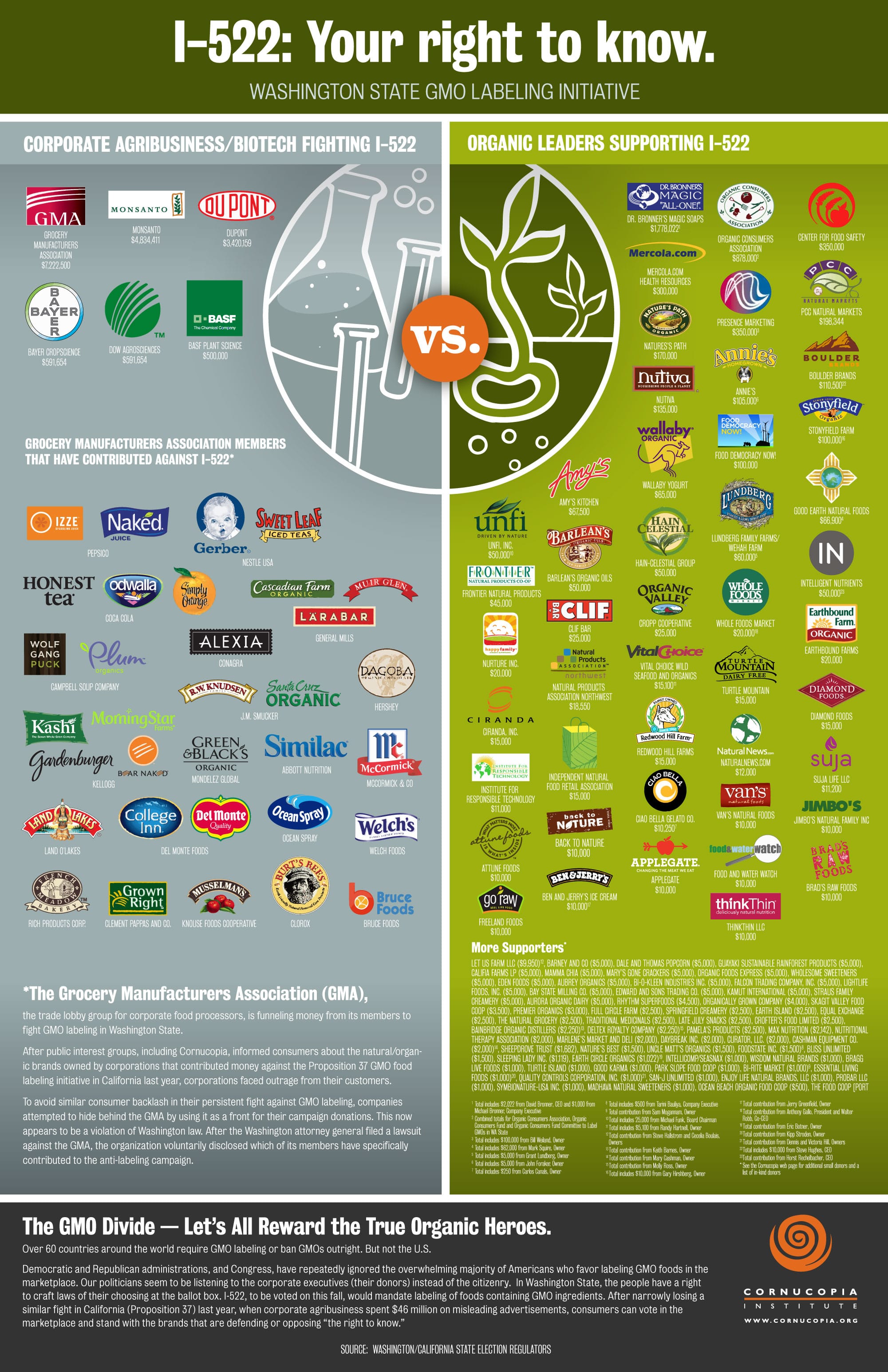
I encourage you to continue educating yourself about genetically engineered foods, and to share what you’ve learned with family and friends. Remember, unless a food is certified organic, you can assume it contains GMO ingredients if it contains sugar from sugar beets, soy, or corn, or any of their derivatives.
If you buy processed food, opt for products bearing the USDA 100% Organic label, as certified organics do not permit GMO’s. You can also print out and use the Non-GMO Shopping Guide, created by the Institute for Responsible Technology. Share it with your friends and family, and post it to your social networks.
Alternatively, download their free iPhone application, available in the iTunes store. You can find it by searching for ShopNoGMO in the applications. For more in-depth information, I highly recommend reading the following two books, authored by Jeffrey Smith, the executive director of the Institute for Responsible Technology:
For timely updates, join the Non-GMO Project on Facebook, or follow them on Twitter.
- Seeds of Deception: Exposing Industry and Government Lies about the Safety of the Genetically Engineered Foods You're Eating
- Genetic Roulette: The Documented Health Risks of Genetically Engineered Foods.
Please, do your homework. Together, we have the power to stop the biotech industry from destroying our food supply, the future of our children, and the earth as a whole.
All we need is about five percent of American shoppers to simply stop buying genetically engineered foods, and the food industry would have to reconsider their source of ingredients—regardless of whether the products bear an actual GMO label or not.
Thursday, October 31, 2013
Monsanto Buys Food Prize

As Lily Tomlin has noted, "No matter how cynical you get, it's almost impossible to keep up."
For example, imagine if a prestigious group announced that this year's "World Environmental Prize" is being awarded to BP, for its unique contribution to the ecology of the Gulf of Mexico. No way, you say? Too absurd?
Yet, it has actually happened.
Rather than encouraging sustainable farming and self-sufficiency in impoverished communities as a way to alleviate poverty and malnutrition around the world, this year's World Food Prize has been "won" by a profiteering, biotech, seed-and-chemical monopolist that's the freakish opposite of sustainability.
Monsanto, which owns 90 percent of the world's genetically modified seeds, is globally infamous for bullying family farmers, bribing and corrupting governments, stiffing independent scientific inquiries into its hokum, running false ads and fraudulent PR campaigns, and going all out to keep consumers from knowing that the crops produced by its seeds contain alien, bioengineered DNA and have not been tested for long-term health and environmental problems.
Why would this avaricious outfit get any sort of award, much less one that can give it a false legitimacy as a corporate "savior" for the world's poor? Perhaps because Monsanto is a major funder of the World Food Prize. Indeed, the foundation that hands out the award is headquartered in downtown Des Moines in a historic building that recently got a spiffy remodeling, thanks to a $5 million donation from — you guessed it — Monsanto. The corporate honoree has also been a steady donor to the food prize foundation, giving some $400,000 to its promotion of industrial agribusiness in the last dozen years.
It was my privilege to go to Des Moines last week for Monsanto's World Food Prize extravaganza. Well, I didn't exactly get into the ceremony where the halo was being fitted on this predatory proliferator of proprietary GMO seeds. In fact, I wasn't even allowed to enter the Monsanto-financed edifice, wasn't invited to sip sauvignon blanc at the Rockefeller reception on the patio, and didn't get to mingle with the corporate, political, and foundation backscratchers at the official hullabaloo.
Rather, I was down the street at the graceful First United Methodist Church, where more than 500 of us scruffy "outsiders" gathered in protest of the Monsanto absurdity. There, real-life Iowa farmers spoke plainly about the myriad of abuses they have endured at the hands of the genetic manipulator.
One pointed out that if the corporation genuinely gave even one damn about hunger, it could've used its immense lobbying clout in Washington this year to stop Congress from stripping the entire food stamp program from the farm bill. Instead, Monsanto didn't lift a finger to help fend off hunger in our own country. It doesn't care at all about feeding the world, he said with disgust, it cares about profits, period.
Indeed, Monsanto is a pitch-perfect example of what Pope Francis was referring to in May, when he declared: "The worship of the golden calf of old has found a new and heartless image in the cult of money and the dictatorship of an economy which is faceless and lacking any truly humane goal." How ironic, then, that Monsanto bought this food prize for itself in order to masquerade as a world hunger fighter, hoping to persuade the Vatican to bless its demonic effort to force the world's poor farmers to buy and become dependent on its altered seed.
The World Food Prize Foundation has grandly dubbed its award "The Nobel Prize for Agriculture." But Monsanto has zero to do with agri-Culture. It is the agri-Business face of the cult of money that Francis warned about — and it has turned this award into the "Ignoble Prize."
Copyright Creators.com
Factory Farms :Taxpayers Pay, Politicians Take, Agribusiness Profits
 Organic Index 10.9.13
Organic Consumers Association, October 9, 2013
For related articles and more information, please visit OCA's All About Organics page, and our Genetic Engineering page.
The agribusiness giants would have us believe that our inherently unsustainable and morally reprehensible factory farming system is the only way to feed the world’s burgeoning population. But the facts prove otherwise. Factory farming is all about maximizing profits for a handful of the world’s largest corporations.
Agribusiness spent $751 million over the past 5 years on lobbying congress and another $480.5 million in direct campaign contributions over the past two decades. Since 1995, taxpayers have provided $292.5 billion in direct agricultural subsidies, another $96 billion in crop insurance subsidies, and over $100 billion in subsidies to promote the growth of genetically engineered corn and soy.
Feeding huge numbers of confined animals actually uses more food, in the form of grains that could feed humans, than it produces. For every 100 food calories of edible crops fed to livestock, we get back just 30 calories in the form of meat and dairy. That’s a 70-percent loss. And recent research from the University of Minnesota shows that reallocating croplands away from fuels and animal feed could boost food available for people by 70 percent without clearing more land.
How did we end up with this cruel, unsustainable, unhealthy, environmentally destructive factory farm model? The numbers say it all.
The Bigger the Farm, the Larger the Taxpayer Subsidy
$292.5 billion: Total amount of taxpayer subsidies given to farms from 1995-2012.
Only $39 billion: Total amount in conservation payments paid to farms between 1995 and 2012.
10: Percentage of farms in the U.S. that collected 75 percent of farm subsidies from 1995-2012.
62: Percentage of farms in the U.S. that did not collect any subsidy payments.
$32,043: Average annual subsidies received by the largest 10 percednt of farms between 1995 and 2012.
$604: Average annual subsidy received by the smallest 80 percent of farms between 1995 and 2012.
Insuring Factory Farms at Taxpayer Expense
$15.8 billion: Cost to U.S. taxpayers in 2012 for providing crop insurance - an overwhelming majority of which went to the largest factory farms.
$96.4 billion: Cost to U.S. taxpayers for subsidizing the Crop Insurance Program from 1995-2012.
$90 billion: Cost of crop insurance to U.S. taxpayers over the next 10 years.
75: Percentage of 2012 crop insurance payouts shouldered by taxpayers.
$10.3 billion: Amount since 2001 that insurance companies have enjoyed in underwriting gains – while taxpayers have lost $276 million.
$1 million: Average amount the 26 largest factory farms collected apiece in crop insurance premium support in 2011.
$227,000: The amount the top 1 percent of policyholders received in crop insurance subsidies in 2011.
$5,000: The amount the bottom 80 percent of policyholders collected in crop insurance subsidies in 2011.
More than 10,000: Number of individual farming operations that received federal crop insurance premium subsidies ranging from $100,000 to more than $1 million apiece in 2011.
10: Percentage of farm businesses that received 54 percent of all insurance subsidies in 2011.
GMO animal feed subsidized by U.S. taxpayers
$84.4 billion: Amount in corn subsidies (88 percent of which is now genetically modified) provided in the U.S. from 1995-2012.
$27.8 billion: Amount in soy subsidies (94 percent of which is now genetically modified) provided in the U.S. from 1995-2012.
Legalized bribery: How American monopolies are built
$751 million: Amount in lobbying expenditures by the agribusiness lobby from 2008-2013.
$480.5 million: Amount the agribusiness sector has contributed to federal candidates during the past two decades, with two-thirds going to Republicans.
$43 million: Amount spent by the Biotechnology Industry Organization (world’s largest biotech trade association) on lobbying from 2008 to 2013.
$33 million: Approximate amount spent by Monsanto (who has patents on 95% of the genetically modified seed market) on lobbying since 2008.
$7.2 million: Amount just 14 members of Congress and their spouses (net worth of up to $124.5 million)—each of them Republican—have received in farm subsidies since 1995. These Congress members all voted to continue farm subsidies from which they personally benefit, while allowing authorization for nutrition programs for low income individuals and families, including food stamps, to expire this year.
Sources:
2013 Farm Subsidy Database, Environmental Working Group
Pork Barrel Politics, By Congressman George Miller, July 2013
Agribusiness, Open Secrets
Monsanto Co, Open Secrets
Biotechnology Industry Association, Open Secrets
Winning the Debate against Factory Farming
Compiled by Zack Kaldveer, assistant media director for the Organic Consumers Association.
Subscribe to:
Posts (Atom)