Showing posts with label Herbs. Show all posts

Monday, August 26, 2013

Cayenne Is One Of Our Creator's Greatest Gifts


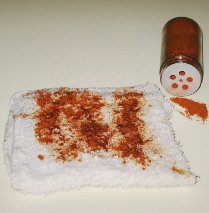
Cayenne pepper is a herb which should be added to your foods whenever possible.

Cayenne’s benefits to the digestive system, circulatory system, and the heart have earned it the nickname "miracle herb".

Some people have used it to aid with weight loss, due to its ability to boost the metabolism.

 Cayenne pepper was first used as a stimulant by the Cherokee Indians. It is most notable for its effect upon the cardiovascular system. Cayenne has been known to stop heart attacks within 30 seconds when taken orally.

The benefits of cayenne usage were first reported by Dr. David Christopher, a naturopathic doctor who spent most of his life discovering and promoting alternatives to pharmaceutical medications. He spent his career being persecuted for challenging the establishment as well.

He is the most noted pioneer in the modern use of cayenne pepper for medication. Dr. Christopher was so instrumental in promoting cayenne in the naturalistic, nutritional, and herbal communities that he is sometimes referred to as "Dr. Cayenne".

Recent clinical studies have been conducted on many of the old time health applications for this miracle herb. Again and again, the therapeutic value of cayenne pepper has been medically validated.
-- Dr. Patrick Quillin

Cayenne has been used medically for thousands of years, and most nations outside the Americas use such herbs as part of their standard protocols. These countries always have better results. In fact, the U.S. is ranked 38th in life expectancy, which places the U.S. health care system below Cuba's, South Korea's, Costa Rica's, Guadeloupe's, Singapore's, and 32 other nations, according to an investigative report by Mother Jone’s Magazine.

It is worth noting that these countries do not have an organization like the F.D.A. that suppresses traditional medicine on behalf of the pharmaceutical industry.

Why Is It Not Used In The U.S.A.?

Cayenne's effects on the heart have been ridiculed by the medical establishment; partly because this common spice is not backed by millions of dollars in research investments and years of clinical studies.

These investments and studies will never materialize, because pharmaceutical corporations know that they cannot patent natural substances. There is also a certain degree of professional arrogance at play in preventing most doctors from considering that a simple spice is potentially more powerful than the expensive and complex pharmaceuticals that they have studied for years.

They also have an understandable level of fear about incurring the wrath of the F.D.A. if they were to ever use an "unapproved drug". That approval will never come since no company will fund research into something that they can never patent.

Making the problem worse is the fact that cayenne’s most impressive property; namely its ability to sometimes stop an ongoing heart attack, cannot be double-blind tested without putting test subjects at great risk.

Why Everyone Should Use Cayenne Pepper

NOTE:  Cayenne is incredible, have used it for years and take several capsules daily.  The strength of Cayenne is critical and all peppers are not created equallyIf you're looking for the most potent form, then you need to consider the 160 heat units found at Starwest Botanicals

Cayenne should be used daily for anyone who has problems with his heart or blood pressure, because it is beneficial to both.

Unlike pharmaceuticals, cayenne pepper helps blood pressure regardless of whether it is initially high or initially low, because it relaxes blood vessels, while causing the heart to beat more efficiently.

 These dual actions practically guarantee circulation improvement, regardless of the pre-existing condition. It is the difference between man-made and God’s medicines. Cayenne does what the 'experts' say is impossible.

Its main medical applications are: weak digestion, chronic pain, shingles, heart disease, sore throats, headaches, high cholesterol levels, poor circulation, blood pressure issues, heart attacks, and toothaches.

The use of cayenne has been attributed to the following benefits in patients: dissolving plaque in the arteries, improving heart efficiency, relaxing blood vessels, increasing metabolism, it helps the body to eliminate scar tissue after heart attacks, eliminates pain when applied topically, produces endorphins to enhance mood, eliminates shock, eliminates cluster headaches and in some cases, treats migraine headaches, fights cancer, provides partial relief of sinus problems and congestion, is anti-inflammatory, causes weight loss, prevents blood clots, reduces serum cholesterol, reduces triglycerides, reduces platelet aggregation, cures stomach ulcers, alleviates muscles spasms, cramps, and bowel pain, and it will rapidly cure sore throat infections when used in a gargle.

 It is a gift from God, in other words.

Cayenne pepper can be purchased in convenient capsule form at health food stores for people who wish to use it as a supplement. We always recommend avoiding regular retailers for supplements.

It is popular to use cayenne infused in warm water. Some people add around half a teaspoon of cayenne to 8 ounces of water or tea, and then they gradually increase the amount of cayenne as their tolerance grows.

For the best treatment of a heart attack, cayenne should be mixed with taurine and held in the mouth, but do not forgo immediate emergency medical attention.

Tuesday, August 20, 2013

Eating Raw Garlic 2X Weekly Works Better Than Chemo

Flickr - Garlic - SantaRosa OLD SKOOL

Marco Torres, Prevent Disease
Waking Times

That’s a statistic the cancer industry cannot claim because almost 40% of cancer patients die within five years and more than 80% die within twelve years either of the cancer or the treatment that was administered for the cancer.

 Eating garlic twice a week will never kill you and it reduces cancer risk without any side effects whatsoever.

The reason so many people die with conventional cancer treatment is that while damaging healthy cells, chemotherapy also triggers them to secrete a protein that sustains tumour growth and resistance to further treatment.

Only through the forces that have carefully conspired to thwart meaningful advances in cancer research and treatment over the past century has chemotherapy succeeded. In what reality do we live in when cut, poison and burn are the only ways acceptable to treat cancer?

The Power of Garlic

Garlic (Allium sativum) is a member of the onion family Alliaceae. Garlic has been used throughout history for both its culinary and medicinal properties. Garlic’s distinctive characteristics arise from sulfur, which constitutes almost 1% of its dry weight.

 Although garlic does not typically serve as a major source of essential nutrients, it may contribute to several dietary factors with potential health benefits, including the presence of oligosaccharides, arginine-rich proteins and, depending on soil and growing conditions, selenium and flavonoids.

Preclinical models provide rather compelling evidence that garlic and its associated components can lower the incidence of breast, colon, skin, uterine, esophagus, and lung cancers. uppression of nitrosamine formation continues to surface as one of the most likely mechanisms by which garlic retards cancer.

The ability of garlic to inhibit tumors due to different cancer-inducing agents and in different tissues indicates that a generalized cellular event is likely responsible for the change in tumor incidence and that the response is highly dependent on environmental or other types of biological insults. Because metabolic activation is required for many of these carcinogens, there is likelihood that either phase I or II enzymes are altered.

A breakdown of allicin appears to be necessary for achieving maximum tumor inhibition. Allyl sulfur compounds preferentially suppress neoplastic over non-neoplastic cells (Sakamoto, Lawson, and Milner 1997).

It is becoming increasingly clear that the response to allyl sulfurs relates to their ability to form free radicals rather than to serve as an antioxidant (Antosiewicz et al. 2008). Allyl sulfurs may bring about changes by influencing the genomic expression by affecting histone homeostasis.
Garlic has even been found to be 100 Times More Effective Than Antibiotics

44% Reduction in Cancer Risk

Researchers at the Jiangsu Provincial Centre for Disease Control and Prevention claim to have found a protective association between the intake of raw garlic and lung cancer, advocating that, “garlic may potentially serve as a chemopreventive agent for lung cancer.”

The study, published online in the journal Cancer Prevention Research,notes that Chinese medicine has used garlic since 2000 BCE. The authors suggest compounds such as diallyl sulfide–that are released when a garlic bulb breaks into cloves–may contribute to the herb’s potential preventative powers. The researchers did not look at cooked garlic in this study.

A number of studies on garlic have appeared dealing with diallyl sulfide and cancer. One from the Republic of Korea cites diallyl disulfide (DADS) as the most prevalent oil-soluble sulfur compound in garlic, inhibiting cell proliferation in many cell lines. Scientists there examined DADS ability to kill cells in a process involving free radical production. They found that the famous tumor suppressor gene, p53, arrested the cell cycle when DADS treatment was present

Cancer cells died following 24 hour DADS treatment that activated the p53 gene. They also found that DADS induced cell death was prevented by treatment with a compound known to prevent p53 dependent cell death by reducing free radical levels in the mitochrondria, the cellular furnaces. Their results showed that mitochrondrial free radicals may serve as second messengers in DADS-induced cell death, which requires activation of p53. That study was found in the January Journal of Biochemical and Molecular Toxicology.

When scientists looked at 4,500 adults in perfect health and 1,424 adults with lung cancer, they discovered that those who ate raw garlic at least twice weekly had a significantly lower chance of contracting lung cancer. Scientists worked it out to be a 44% less likely chance. Findings were similar even if the adults smoked or were near cooking fumes, with a 30% less likely chance.

The researchers conducted face-to-face, standardised interviews in China with 1,424 lung cancer patients and 4,543 healthy controls which aimed to find out about participants’ lifestyles and diets – in particular how much garlic they ate and whether they smoked.
According to the researchers the “effective components in garlic in lung cancer chemoprevention warrant further in-depth investigation.”

Supplement opportunities

The researchers suggested that diallyl sulphide – a compound released when a garlic bulb sprouts into cloves – may be at the root of garlic’s preventative potential.
Diallyl sulphide is a breakdown of allicin, an antibiotic and anti-fungal compound largely depleted by cooking or pickling.

While the study concentrated primarily on garlic in its raw state, it can also be consumed in tablet, oil, powder, aged and cooked form.

Garlic (allium sativum) is an important ingredient of Chinese medicine and can be found within many traditional herbal remedies and traditional Chinese medicines (TCMs).
Yet proclamations of these health properties can be found outside of China too. The World Health Organisation’s guidelines recommend a dose of around one clove of fresh garlic for adults per day. While garlic tablets are a licensed drug in Germany, where they are prescribed for the treatment of atherosclerosis.

Most of us buy garlic at a supermarket. We don’t know what kind it is, how fresh it is or where it’s grown. But there’s a good chance it comes from China, which produces 75 percent of the world’s supply — and whose food exports have come under scrutiny after recent discoveries of tainted pet food ingredients, toothpaste and more.

According to Euromonitor International, China produced 13,719,1000 tonnes of the world’s 17,789,7000 tonne supply of garlic in 2012.

Garlic is the United States’ biggest fresh-vegetable import from China, which sent 138 million pounds of it worth more than $70 million last year. The U.S. also gets small amounts from Mexico, Argentina and about 15 other countries.

The U.S. Department of Agriculture’s Foreign Agricultural Service says dehydrated Chinese garlic imports increased 384 percent in the past 10 years. Independent lab tests found “high levels of lead, arsenic and added sulfites in two supermarket-brand imported garlic powders from store shelves.”

My advice is to buy garlic locally if you can and avoid chinese garlic whenever possible.

NOTE:  My advice is to grow your own garlic, nothing could be easier no matter where you live.  In snow country, I plant my garlic at least several weeks before the snow covers it.  It's protected with about 6 inches of straw and needs nothing done to it all winter long.   You'll see it's lovely green shoots sticking up through the snow, not a problem if you pick the right strain.

Once the snow melts, continue to keep soil moist, but not wet and you'll harvest some amazing garlic.  I typically grow about 4 different, very fiery strains.  


Saturday, August 10, 2013

!st Chinese Herbs Gives 5 Examples How To Use Daily


Our knowlegable staff at  1st Chinese Herbs     are ready and able to answer your questions, on how to use the herbs, properities of the herbs, storage of the herbs, and the advantages and disadvantages of using whole herbs, powdered herbs, or packaged herbs. 
 
Below are 5 examples which will help.

5 Ways to use Bulk Herbs
Herbal Teas:  

Infusions, also known as steeping is easy to do. 
  • Take 1 to 2 tablespoons of the herb to 8 ounces of water. 
  • Bring the water to a boil.  Place herbs into a  reusable teabag or any other non metallic holder then place into a container that can be sealed. 
  • Pour water  into the cup and cover for 5 - 15 minutes.
  • Covering the cup keeps the volatile oils potent until ready to drink.  The reason the difference in time depends upon whether it is leaf, stems, root, or seeds.
Decoctions:
A decoction is also similar to an infusion, and necessary when using sturdy plant material like herbal roots, barks, pits, seeds, hard berries, root-barks and stems. These parts need to have their active components extracted in a more concentrated procedure

  • The parts of the plant should be uniform in size.  Usually about 1 inch long, by 1/8 inch thick. Use 2-4 tablespoons of the dried herbs for 1 ½ pints of water.
  • Place the herbs in a saucepan with the water, and boil the decoction.
  • The boil should be a rolling boil, yet gentle.
  • Simmer the mixture until the volume of the liquid has been reduced by about a half. This will take any where from 15 - 45 minutes 
  • Strain the mixture.
  • The decoction should be used in three wine-glass-sized doses throughout the day. It should be stored in a pitcher in a cool place.
  • The decoction can be reheated and flavored with a little honey if desired
Poultice: 
  • 4 ounces of herbs slightly bruised it is best for the herbs to be in a ground form.  
  • Pour boiling hot water over the powder -  enough hot water to make a thick paste. 
  • Apply the paste in a layer about 1/4th inch thick on a piece of cotton cloth large enough to cover the area completely. 
  • The cloth can be gauze or a light material, to insure that the herbs can penetrate through. 
  • To keep the heat in  cover  with a piece of plastic.   
  • Leave it on until the herbs have cooled. 
  • As a side note: Whole herbs can be used as well. Do not reuse the same poultice. Clean cloth is needed each time the problem area is addresses.   The poultice is to be used on an area that has been thoroughly cleaned.  Poultices can be used for eruptions, boils, carbuncles and abscesses and infected wounds.
Herbal Baths: 
  • 2 to 4 of your favorite herbs.  Most commnly used are peppermint, roses, rosehips, lemongrass, sage, lavender, and chamomile.
  • Place into reusable tea bag and toss into the bath tub, while the water is running.
  • Insure that you do not use any herbs that can cause inflammation. 
  • If not wanting to use in bath, this can be used as a loofa in the shower.
Herbal Extracts: 
  • 1:4  ratio. 1 ounce of herbs to 4 ounces of vodka or brandy. 
  • Place in bottle that can be sealed tightly. 
  • Pour alcohol over the herbs insuring that the herbs are completely cover, even if it takes more liquid to do this. 
  • Let this mixture age  for 6 weeks, slightly shaking it everyday. You may find that you will need to add more alcohol to insure that the liquid is all the way to the top of the container. 
  • Do not put this in direct sunlight.  
  • After 6 weeks drain, and use as directed.
  • Label the jar with date, contents, and ingredients
Salves and Ointments:
Choose herbs with healing, soothing properties to prepare your own salves and ointments to apply to sore skin and wounds. Simply combine an infused oil with chosen herbs and beeswax.
  • Pour 3-4 fluid ounces of an infused oil into a glass bowl, and place over a pot of boiling water.
  • Add small, square piece of beeswax to the infused oil, stirring constantly until the wax has completely melted.  If not thick enough add more beeswax, very small pieces at a time.  The beeswax will thicken the mixture, giving it just the right consistency.
  • Pour the warm liquid into small, dark ointment jars.
  • Store in a cool, dark place.

Always label, with date, herbs used, quantity used, and what the reason you made the mixture.